
The Perfect Balance of Luxury and Craftsmanship.
Every hand-tufted carpet begins with a vision and is brought to life by the skilled hands of experienced artisans. Crafted using premium materials and refined handmade techniques, each piece is thoughtfully created to offer exceptional comfort, lasting quality, and complete design freedom. From bespoke colors and intricate patterns to unique textures and custom sizes, every detail is carefully considered to complement the individuality of a space. Combining the warmth of traditional craftsmanship with the versatility of contemporary design, hand-tufted carpets are admired for their luxurious feel, timeless appeal, and ability to transform interiors into spaces of effortless elegance. At The Carpetra, every carpet is more than a product—it is a handcrafted expression of artistry, created to be lived with and appreciated for years to come.
The Tufting Journey
Design Development
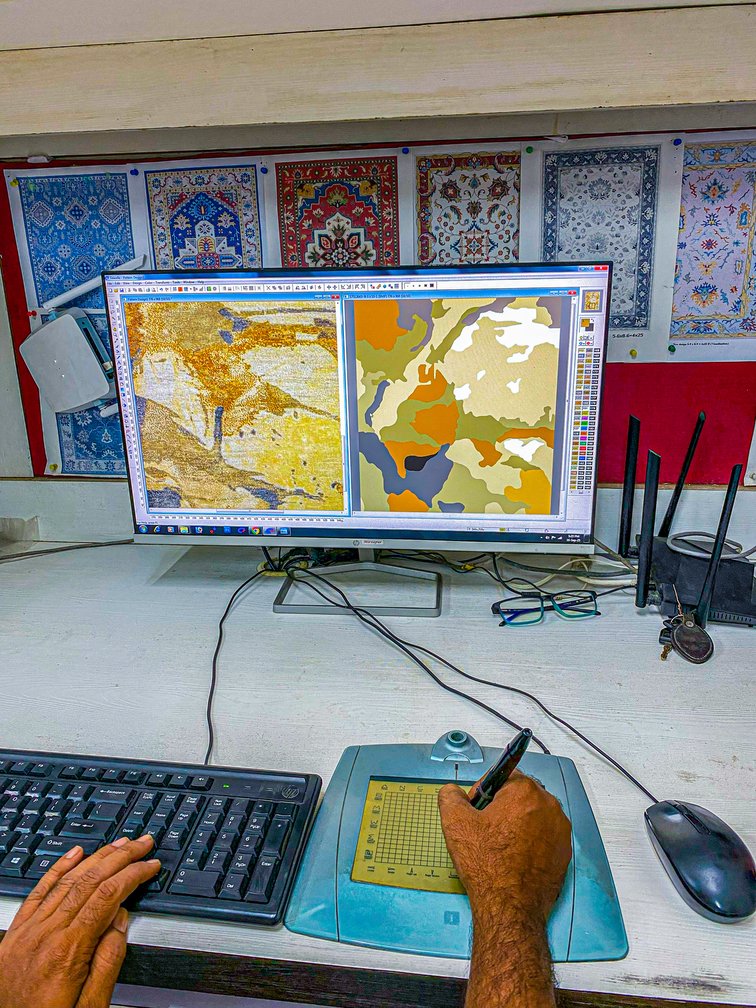
The approved artwork is developed into a precise CAD design, where proportions, patterns, colors, and details are carefully mapped. Every element is thoughtfully arranged to ensure the design translates beautifully from a visual concept into a finished carpet. The scale, composition, and finer details are refined at this stage.
Once the CAD design is finalized, a detailed naksha (design map) is prepared as a working guide for the artisan. Alongside it, a carefully matched shade card is created to establish the exact color palette.
Canvas Preparation
The right canvas is carefully selected according to the carpet’s quality, construction, pile height, and intended use. Once the canvas is prepared and securely stretched onto the frame, the approved CAD design is accurately transferred onto its surface through plotter printing or precise tracing.
This stage brings the design from the screen onto the working canvas, transforming a digital concept into something tangible. With the artwork clearly mapped, the foundation is ready for the first yarn to be placed.
Material Selection
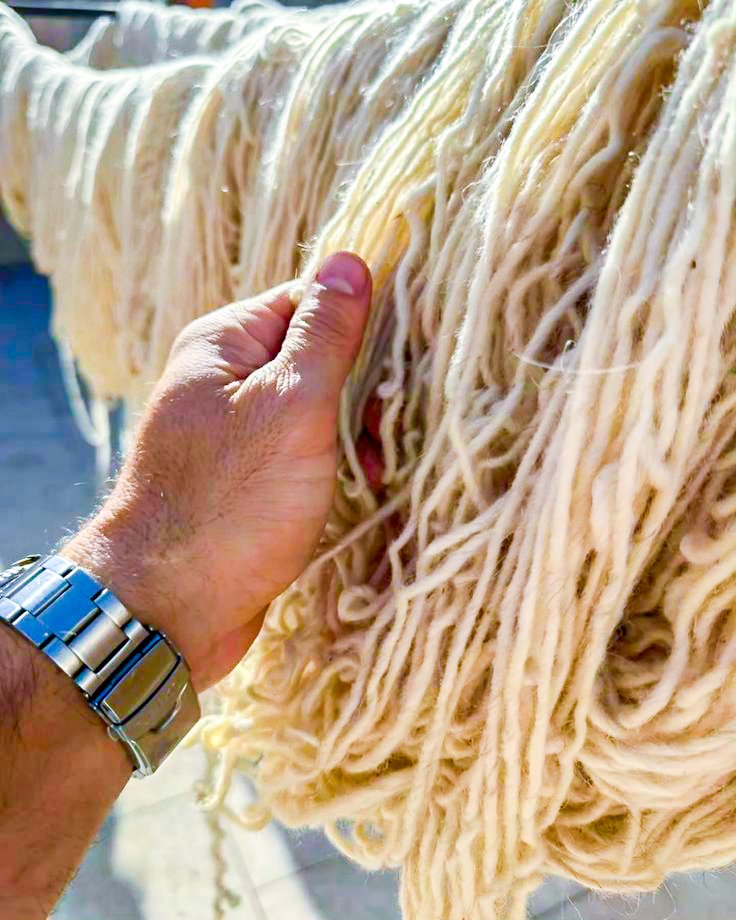
The right material gives a carpet much of its character—its softness, texture, resilience, and overall presence. Based on the design and intended use, carefully selected fibers such as New Zealand wool, Indian wool, viscose, Tencel, or bamboo silk are chosen to achieve the desired feel and visual expression. Each material is considered for its individual qualities and for how naturally it complements the design.
Material Dyeing
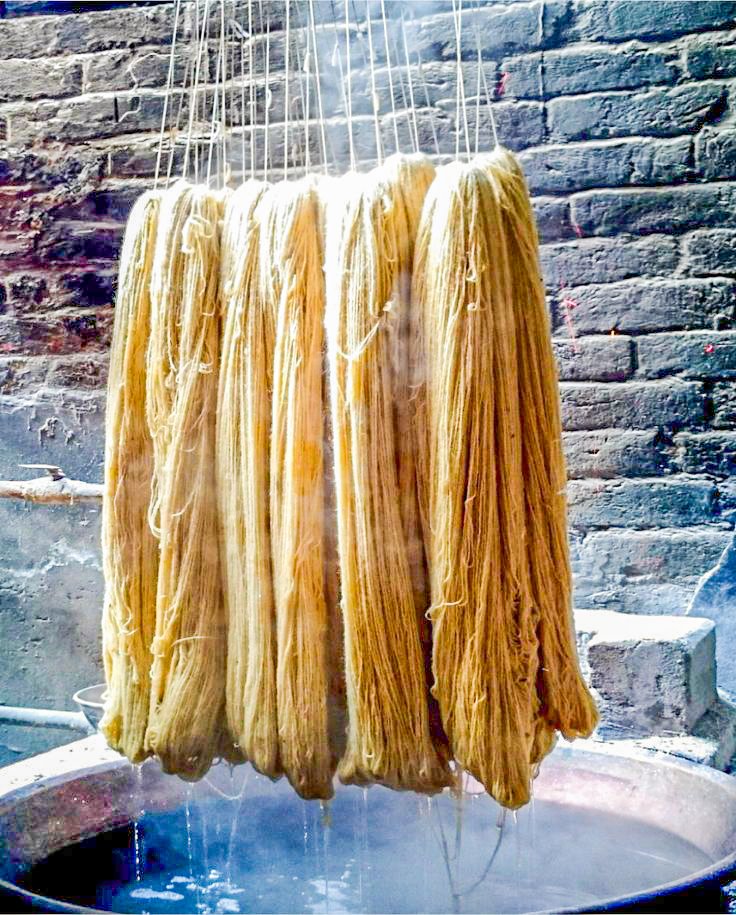
Once the materials are selected, the yarns are carefully prepared for color. Each shade is developed to match the approved shade card, with close attention to tone, depth, and consistency. The dyeing process is carried out with care so the color settles beautifully into the fiber while preserving its natural character, softness, and intended appearance.
Each color is reviewed under appropriate lighting before production begins, ensuring the chosen shades work harmoniously together.
Material Opening
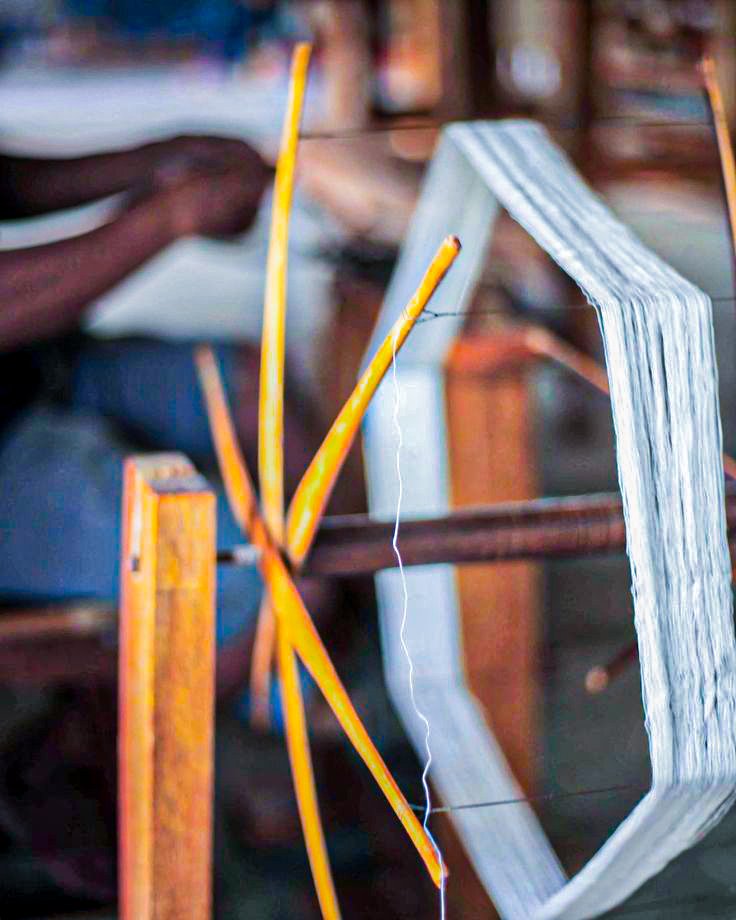
Once the dyed materials are ready, the yarn is carefully opened and prepared for tufting. The fibers are gently loosened and arranged to achieve the right consistency and workable condition, allowing the yarn to move smoothly through the tufting process without compromising its natural character.
This stage helps maintain an even flow, consistent texture, and a clean surface, giving the artisan greater control as the design begins to take shape.
Weaving
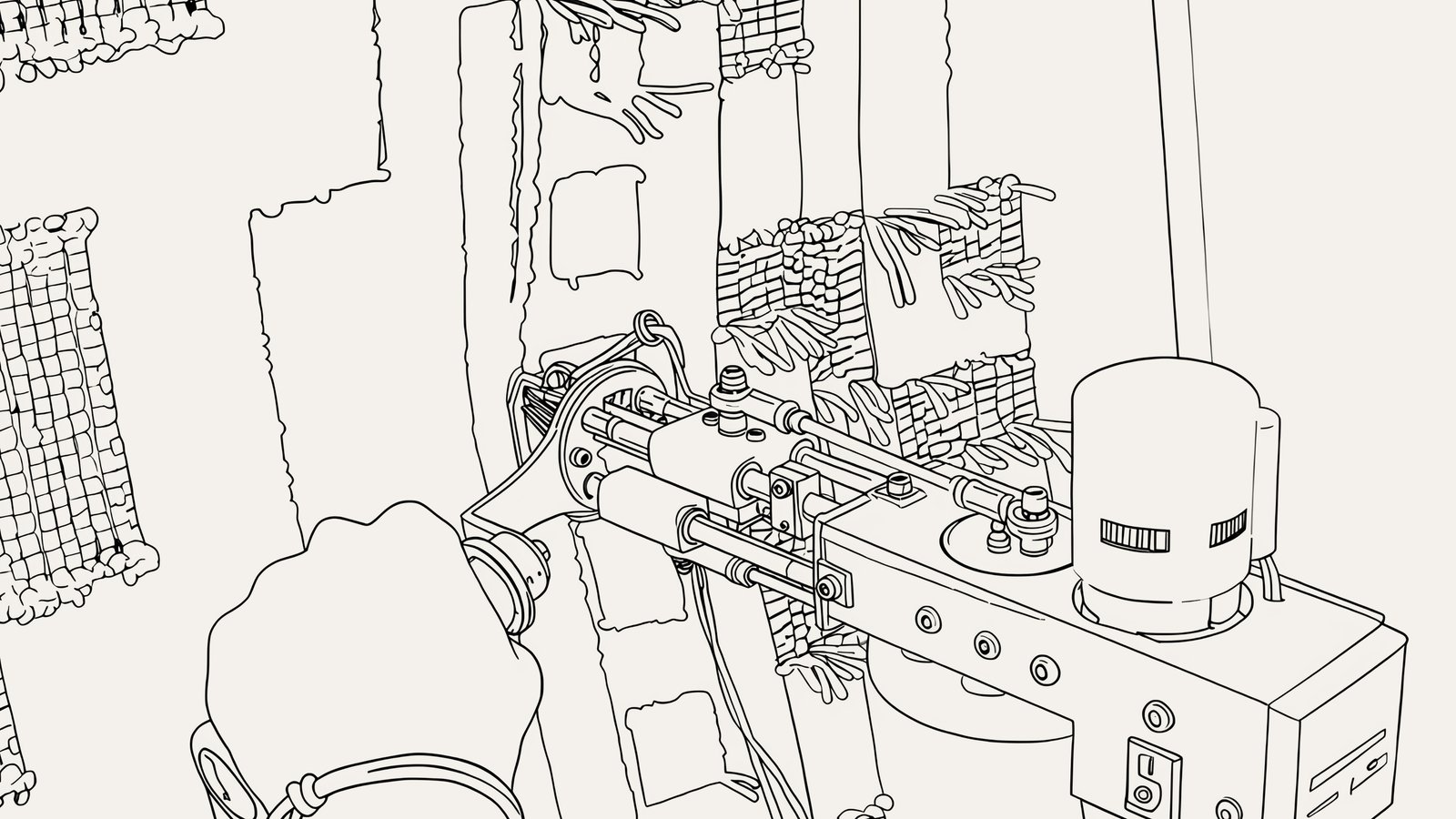
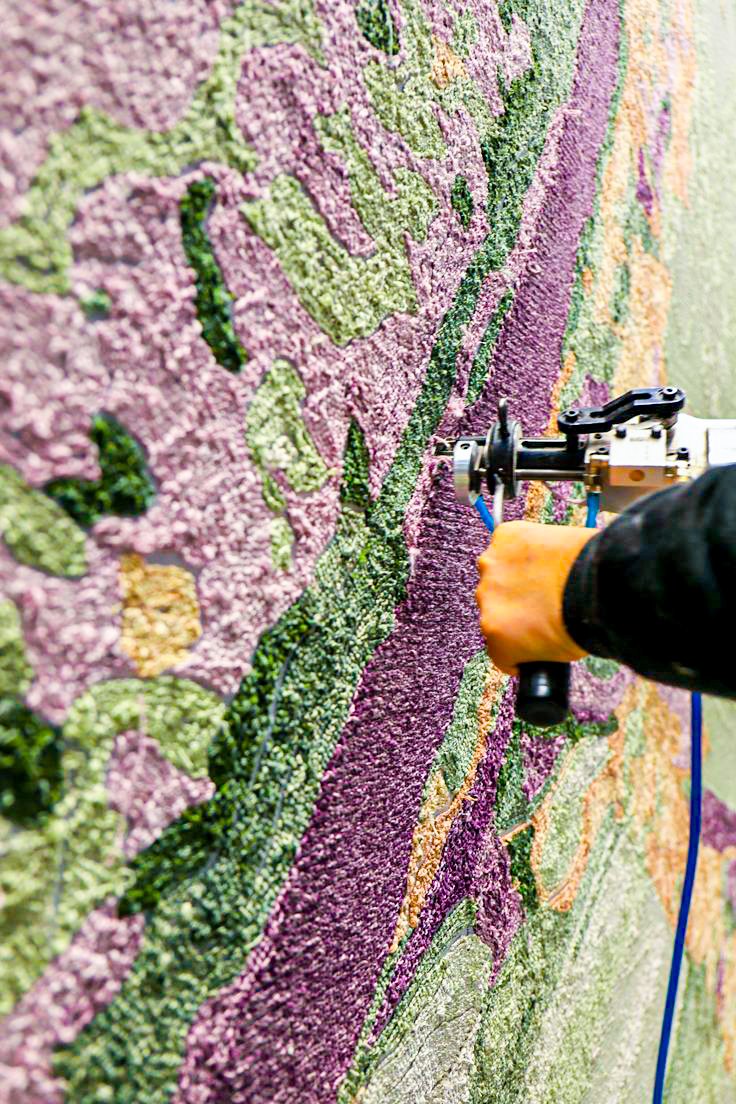
With the canvas prepared and the yarn ready, the design begins to take shape through skilled hand-tufting. Using a hand-operated tufting gun, the artisan carefully inserts the selected yarn into the canvas, following the marked design with patience and precision. Each line, curve, color, and section is built by hand.
The artisan continuously observes the pattern, pile height, density, and placement of the yarn to maintain the intended character of the design.
Latexing
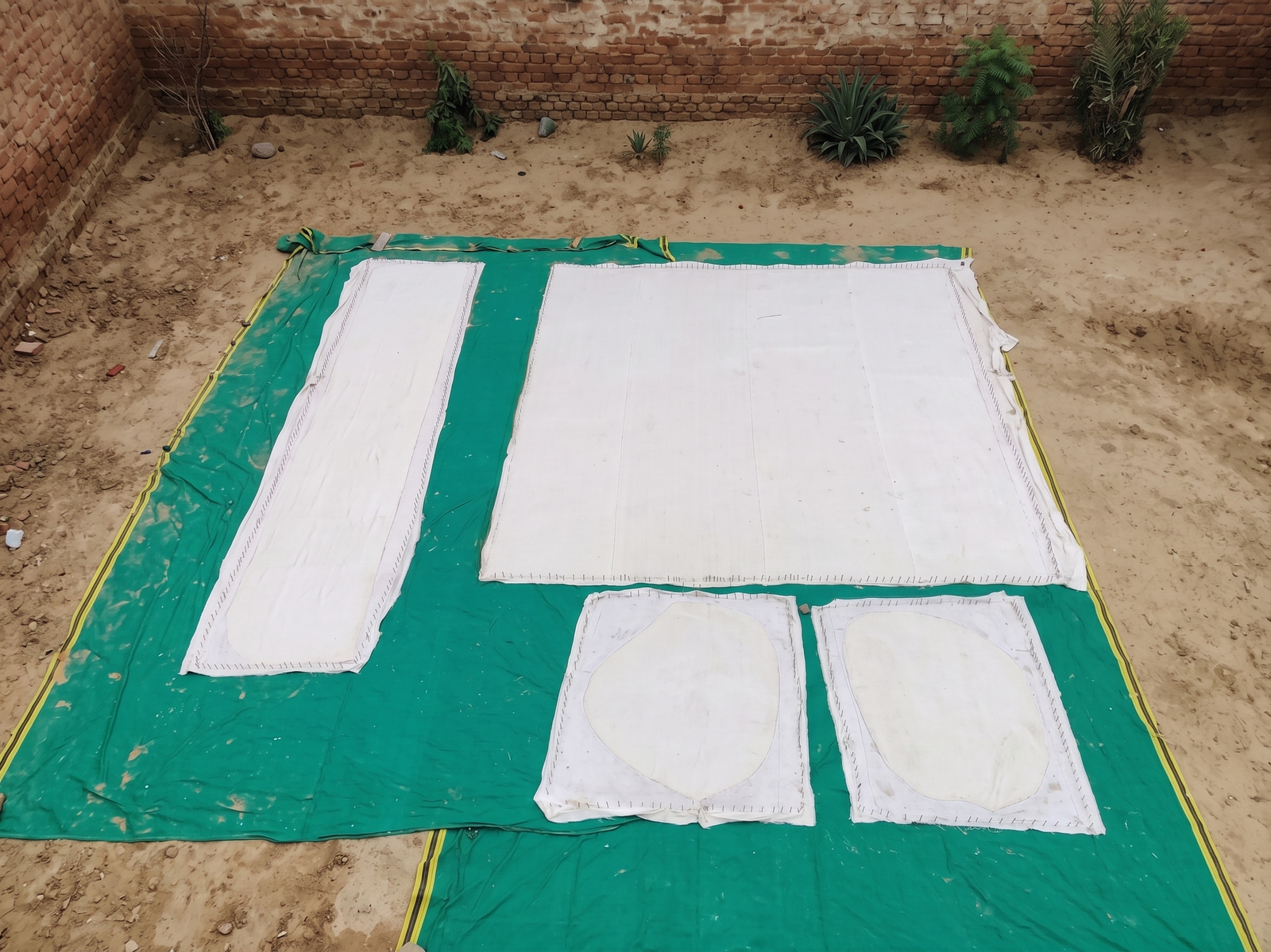
Once the tufting is complete, the carpet is carefully taken off the loom and laid out for the next stage. It is stretched precisely on level ground to achieve its intended dimensions and maintain accurate proportions.
A premium natural rubber latex is then carefully applied across the reverse of the carpet to secure the tufted yarn firmly in place. The latex penetrates the foundation and helps hold the individual tufts together, adding strength, stability, and durability.
Clipping
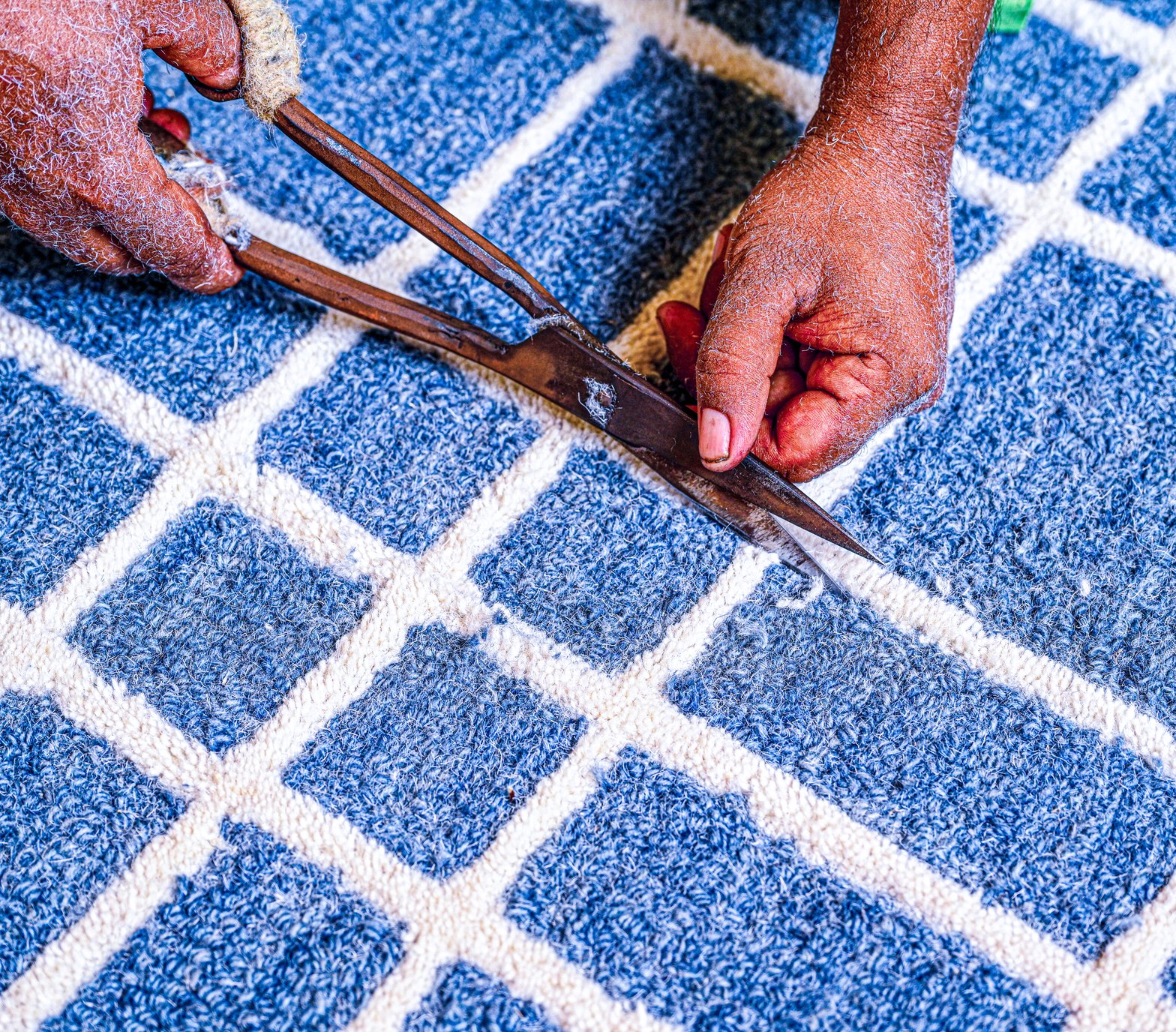
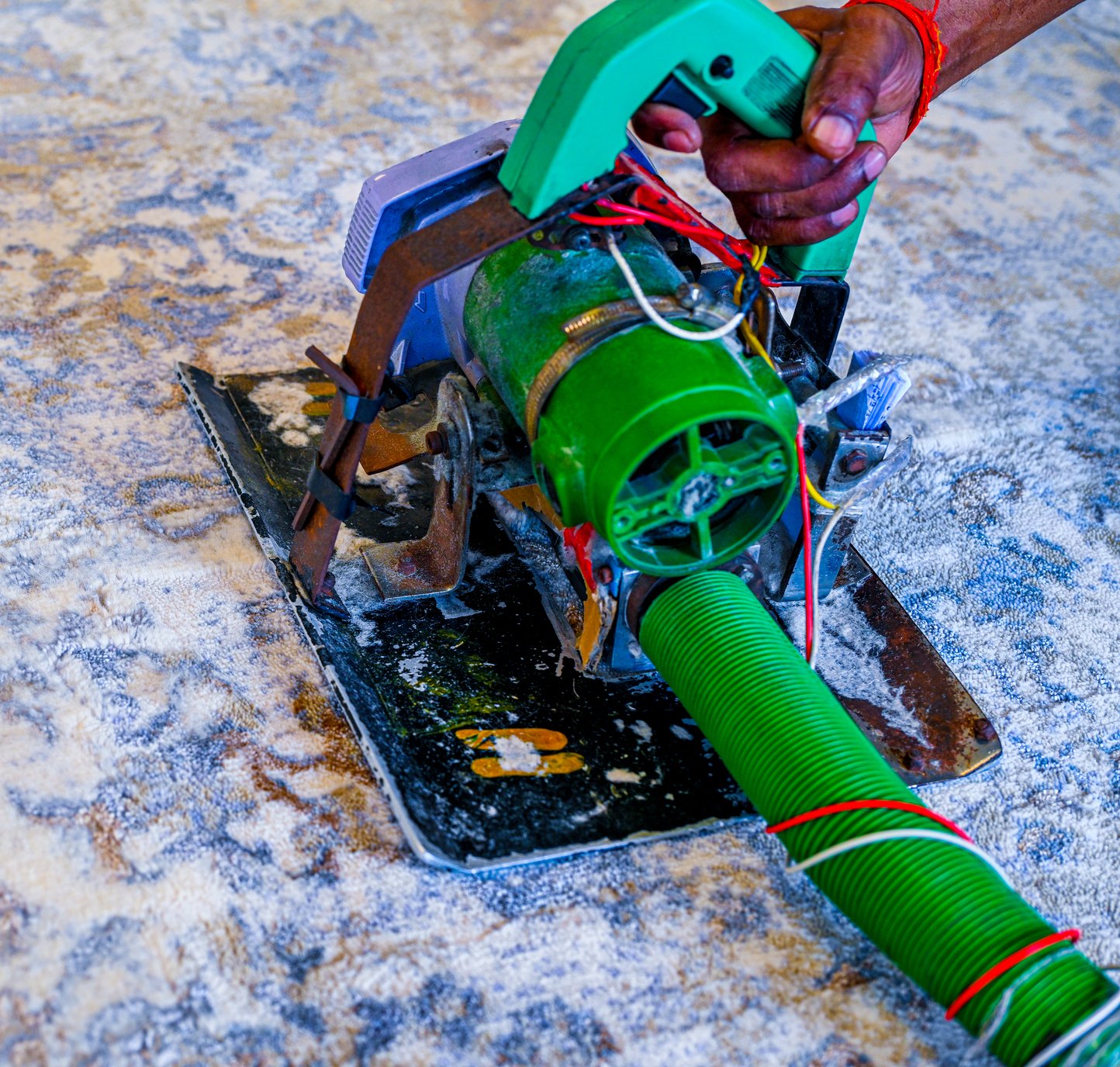
In the clipping stage, the pile is carefully trimmed to achieve the required height and surface consistency. Skilled artisans work across the carpet with precision, removing uneven fibers and refining the pile so the surface feels consistent while preserving the character of the original design. Careful clipping brings greater definition to patterns, improves surface uniformity, and prepares the piece for further hand finishing.
Carving
Once the pile has been carefully clipped, the carpet is refined further through hand carving. Skilled artisans carefully shape selected areas of the surface, following the design to create differences in height, definition, and texture. Every line and contour is worked by hand, giving the pattern greater clarity.
Subtle changes in height create natural shadows as light moves across the surface, revealing details that may not be visible in a flat pile. It is a precise finishing art.
Edge Binding
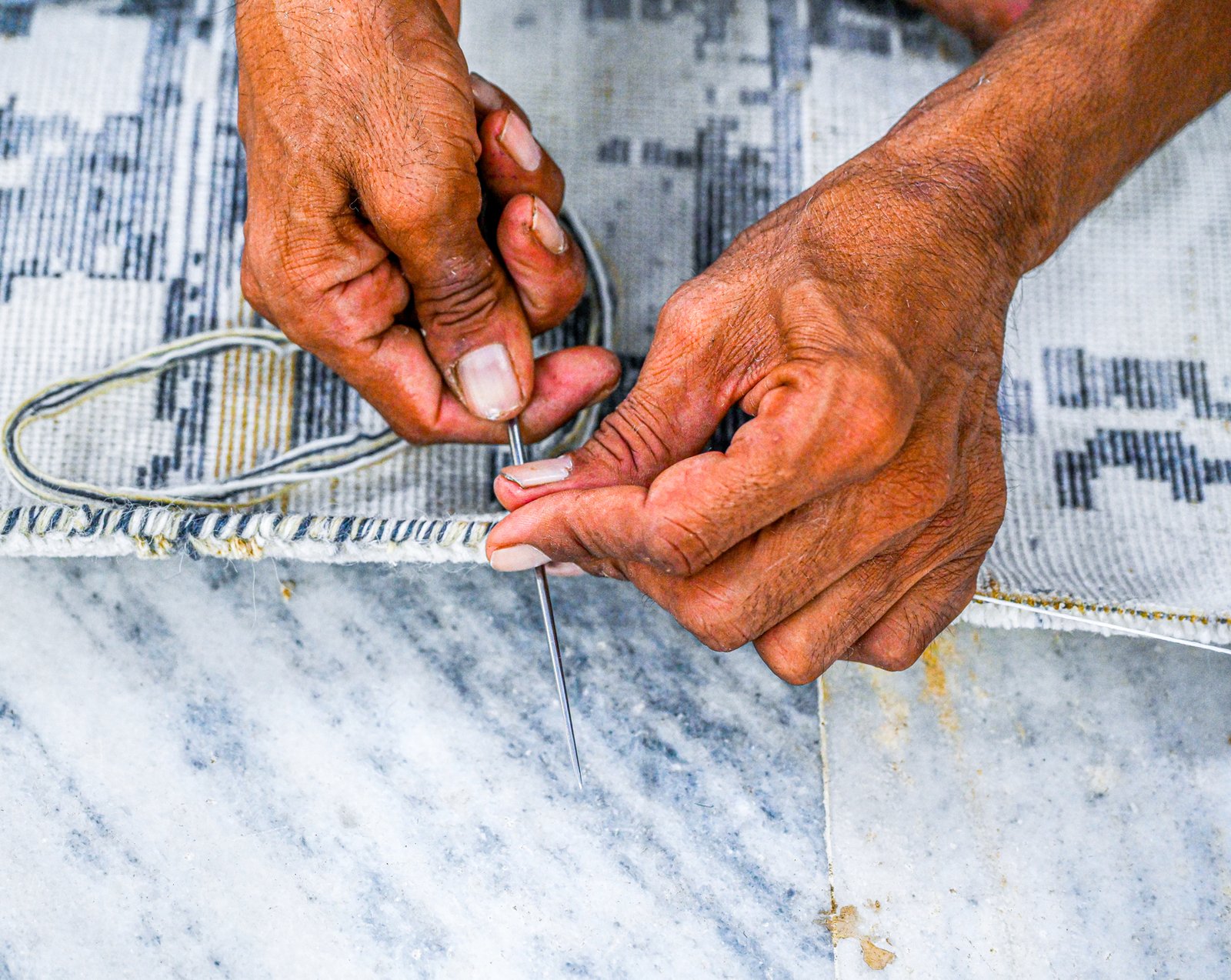
The edges of a hand-tufted carpet are carefully secured and finished by hand to create a clean, strong, and refined perimeter. Using a long hand-sewing needle and selected yarn, the artisan works carefully along the carpet’s edge, wrapping and stitching the yarn around the perimeter to bind and reinforce it.
Particular attention is given to the corners, edge tension, alignment, and stitch consistency. The result is a beautifully finished edge that complements the carpet’s surface.
Final Finishing
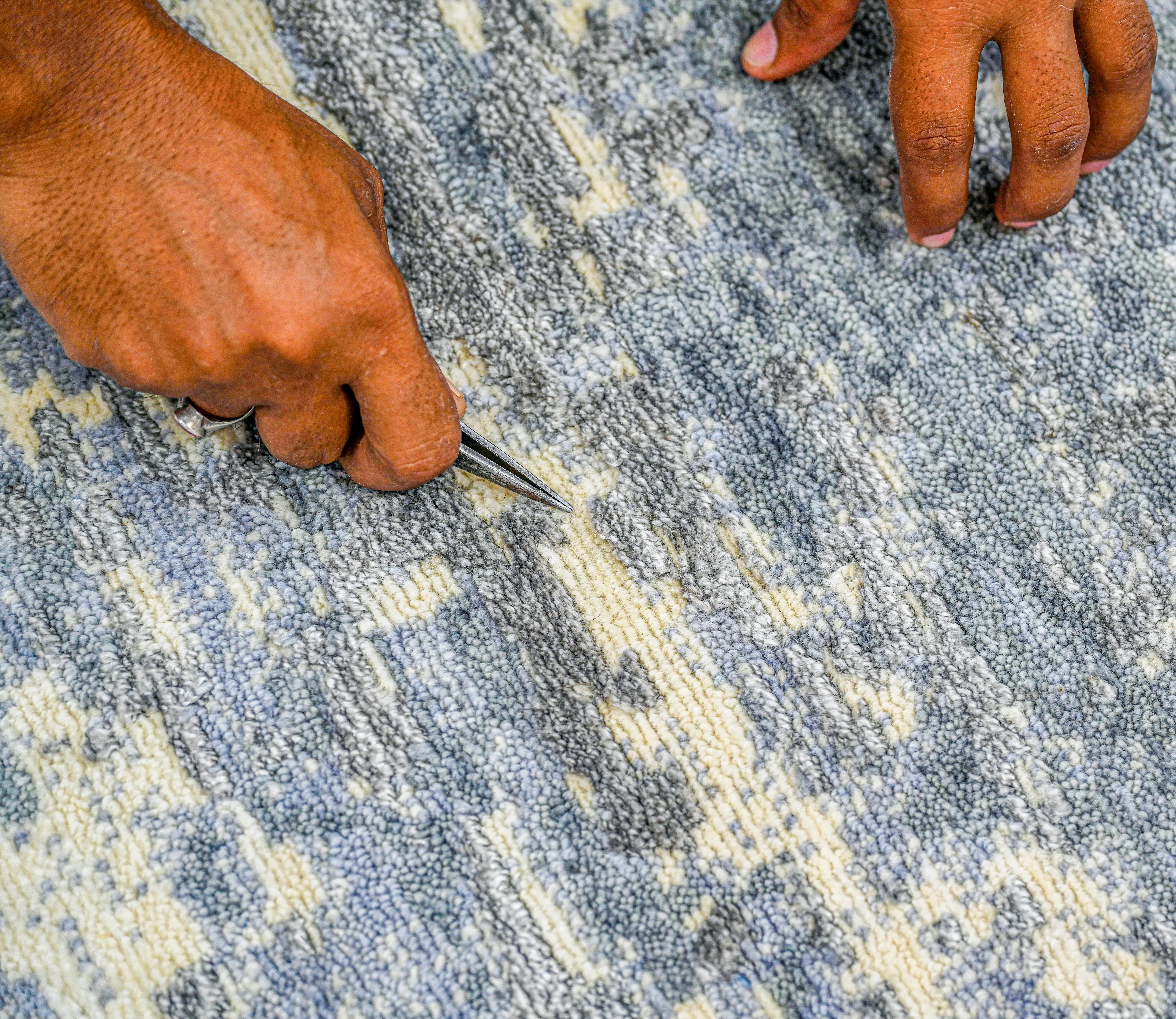
The carpet now receives its final structural and finishing details. A backing cloth is carefully applied to the reverse side, providing a clean, refined finish while adding further support to the construction. The nevar (side border) is securely finished along the edges to strengthen the perimeter.
Once the finishing is complete, every carpet undergoes a detailed quality inspection. Dimensions, surface, carving, edges, backing, color, and overall workmanship are carefully examined before dispatch.
The Surface Story
A carpet is experienced as much through touch as through sight. The interplay of pile, texture, height, and light gives every hand-tufted piece its own presence—sometimes soft and understated, sometimes richly sculpted and expressive. Thoughtfully crafted surfaces bring depth to the design and allow the carpet to reveal new details as you move through the space.
Pile
Pile is the visible, tactile surface of a carpet, created by the yarns that rise from its foundation. Its construction, height, and finish influence everything from the feel underfoot to the way light moves across the design. In hand tufting, pile can be carefully tailored to create different levels of softness, definition, texture, and visual depth.
Loop Pile
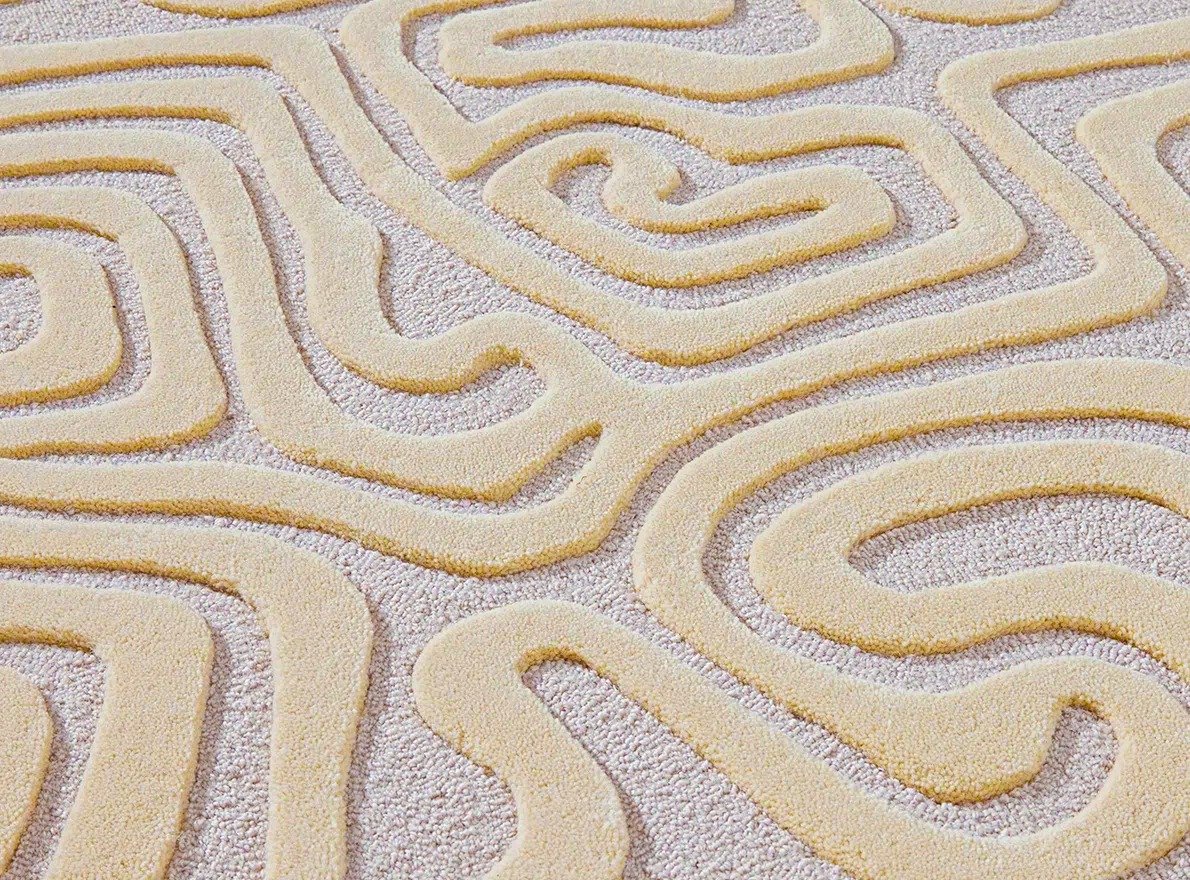
Loop pile is created by leaving the yarn in continuous loops across the surface. This produces a structured, tactile, and naturally textured finish with a clean visual character. Loop pile works beautifully for contemporary, understated designs where subtle texture and definition are desired.
Cut Pile
Cut pile is created by cutting the yarn loops to form individual fiber tips, resulting in a softer, smoother, and more luxurious surface. It allows colors and patterns to appear softer while creating a beautiful interaction between light and the pile.
Texture
Texture gives a hand-tufted carpet its depth and tactile identity. It is shaped through the careful interplay of fiber, pile height, density, carving, and finishing. A smooth, closely finished pile can create a quiet appearance, while varied heights and sculpted areas introduce shadow, movement, and dimension.
The Shape of Space
A bespoke carpet does not always have to follow a conventional form. Hand tufting allows the shape to be thoughtfully adapted to the architecture, proportions, furniture, and character of a space.
Beyond the overall silhouette, the shape can also be designed to respond to the finer details of an interior. Curved edges can soften architectural lines, while defined geometric forms can reinforce a more structured environment.
The Art of Proportion
In bespoke hand tufting, size is not limited to standard dimensions. Each carpet can be made to the exact requirements of a space, from intimate accent pieces to expansive floor coverings designed to anchor large interiors.
Hand tufted construction offers exceptional flexibility for large-format and custom-sized carpets, allowing expansive designs to be created beyond conventional retail sizes.
The Measure of Quality
A hand-tufted carpet’s quality is built into its construction. The canvas, canvas density, fiber selection, yarn weight, and tufting density work together to determine the carpet’s body, surface character, resilience, and expected performance.
These levels are intended as a general quality framework rather than a universal industry grading system. Actual performance and lifespan depend on the complete construction, including fiber type, yarn quality, tuft density, pile height, backing, finishing, placement, traffic, and maintenance. For bespoke projects, specifications can be adjusted according to the design intent.