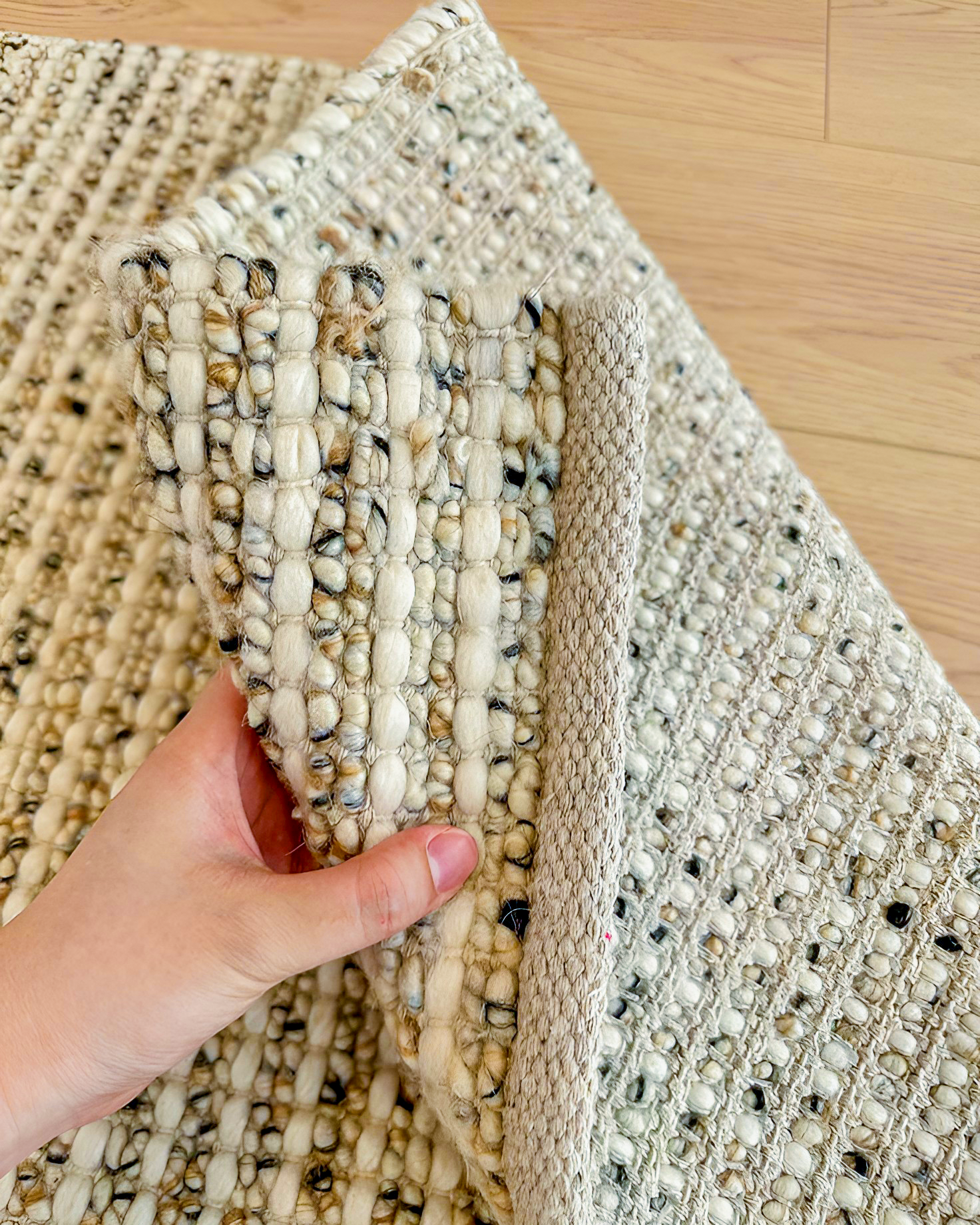
The Beauty of Handcrafted Texture.
Every handwoven carpet begins with a vision and gradually takes shape through the practiced hands of experienced artisans. Crafted using carefully selected materials and traditional hand techniques, each piece reflects the patience, skill, and quiet attention to detail that define authentic handwoven craftsmanship.
From refined colors and considered patterns to distinctive textures, surface character, and bespoke dimensions, every detail is thoughtfully developed to give the carpet its own identity and enduring presence. The natural interaction of the fibers and the artisan’s hand creates subtle variations throughout the surface, giving each piece a distinctive tactile character.
Rooted in the heritage of traditional handwoven craftsmanship while embracing contemporary design, handwoven carpets are admired for their organic texture, understated elegance, and authentic character. At The Carpetra, every carpet is more than a floor covering—it is a crafted expression of material, texture, and human touch, thoughtfully created to complement a space and be appreciated for years to come.
The Woven Journey
DESIGN DEVELOPMENT
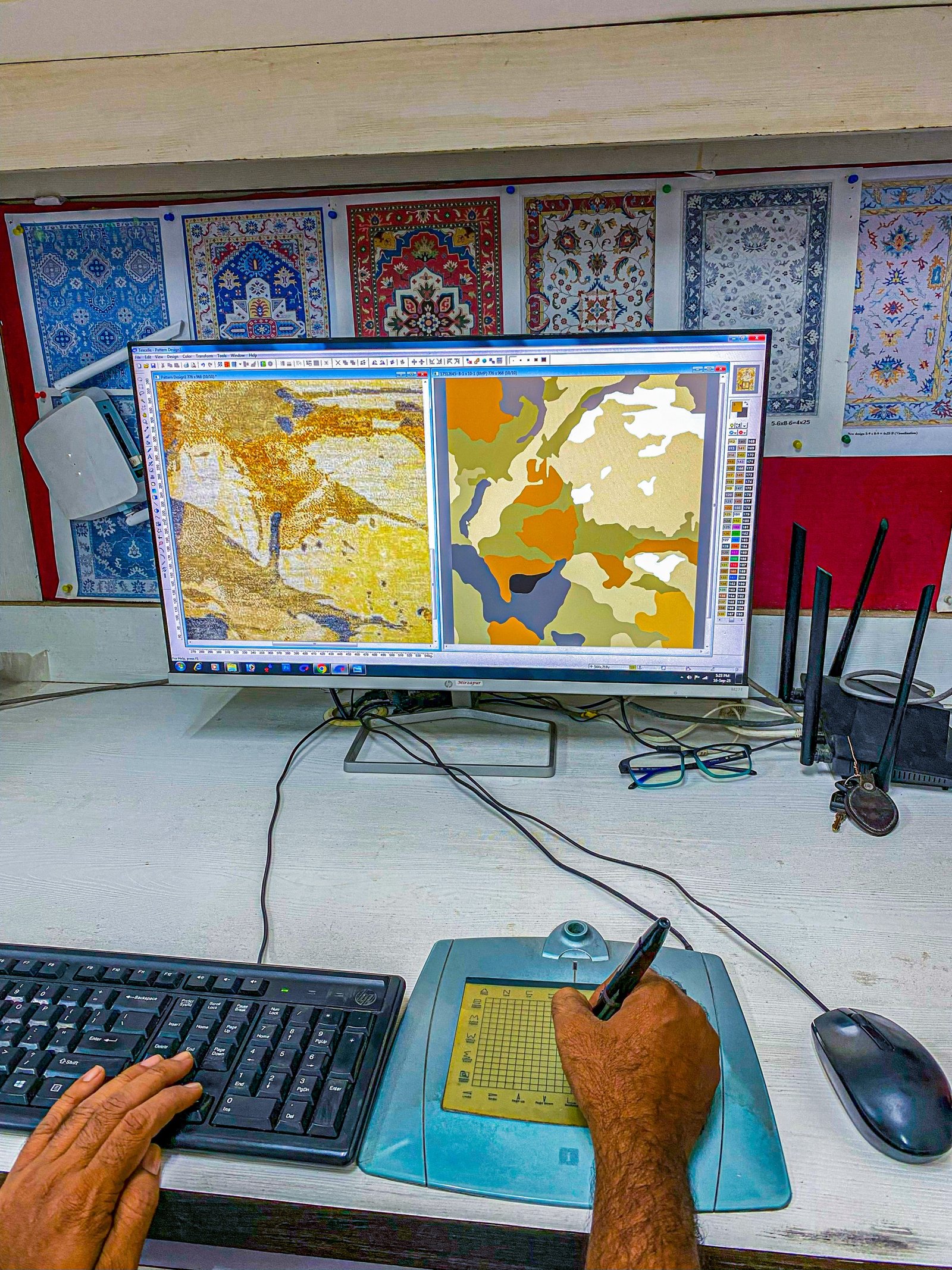
The approved artwork is developed into a precise CAD design, where proportions, patterns, colors, and intricate details are carefully mapped for the handwoven construction. Every element is thoughtfully refined to ensure that the design translates naturally through the weaving process, with particular attention given to scale, composition, repeat, color placement, texture, and the visual character the finished piece is intended to carry.
Once the design is finalized, a detailed weaving design plan is prepared as the artisan’s visual reference for the making process. A carefully developed shade card is also created to establish the intended color palette and yarn selection. Together, these references provide the foundation for a controlled weaving process, helping preserve the proportions, character, and original intent of the design throughout its creation.
MATERIAL SELECTION
The right material gives a handwoven carpet much of its character—its texture, softness, strength, color expression, and longevity. Based on the design, weaving technique, intended use, and desired finish, carefully selected yarns and fibers are considered for each carpet. Materials are chosen according to their suitability for the construction, desired surface character, color expression, and overall performance, ensuring that each component works naturally within the weaving process.
The selection is not based solely on appearance or feel. Fiber quality, yarn structure, consistency, strength, and compatibility with the weaving technique are carefully evaluated to ensure the material performs as intended throughout the making process. This thoughtful selection establishes the foundation for the carpet’s texture, structure, visual character, durability, and overall expression.
MATERIAL DYEING
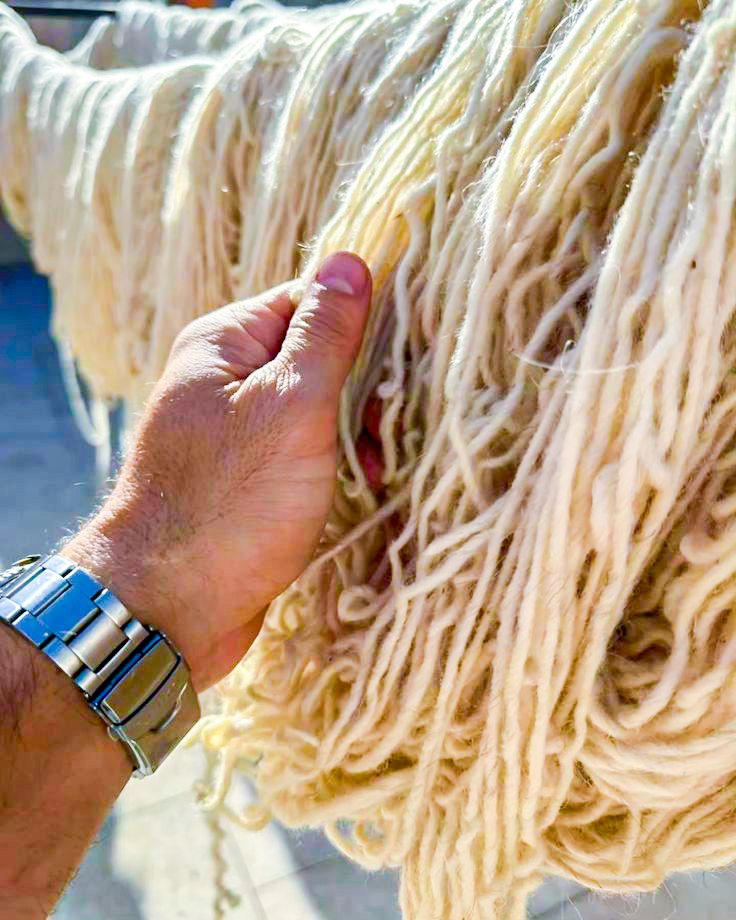
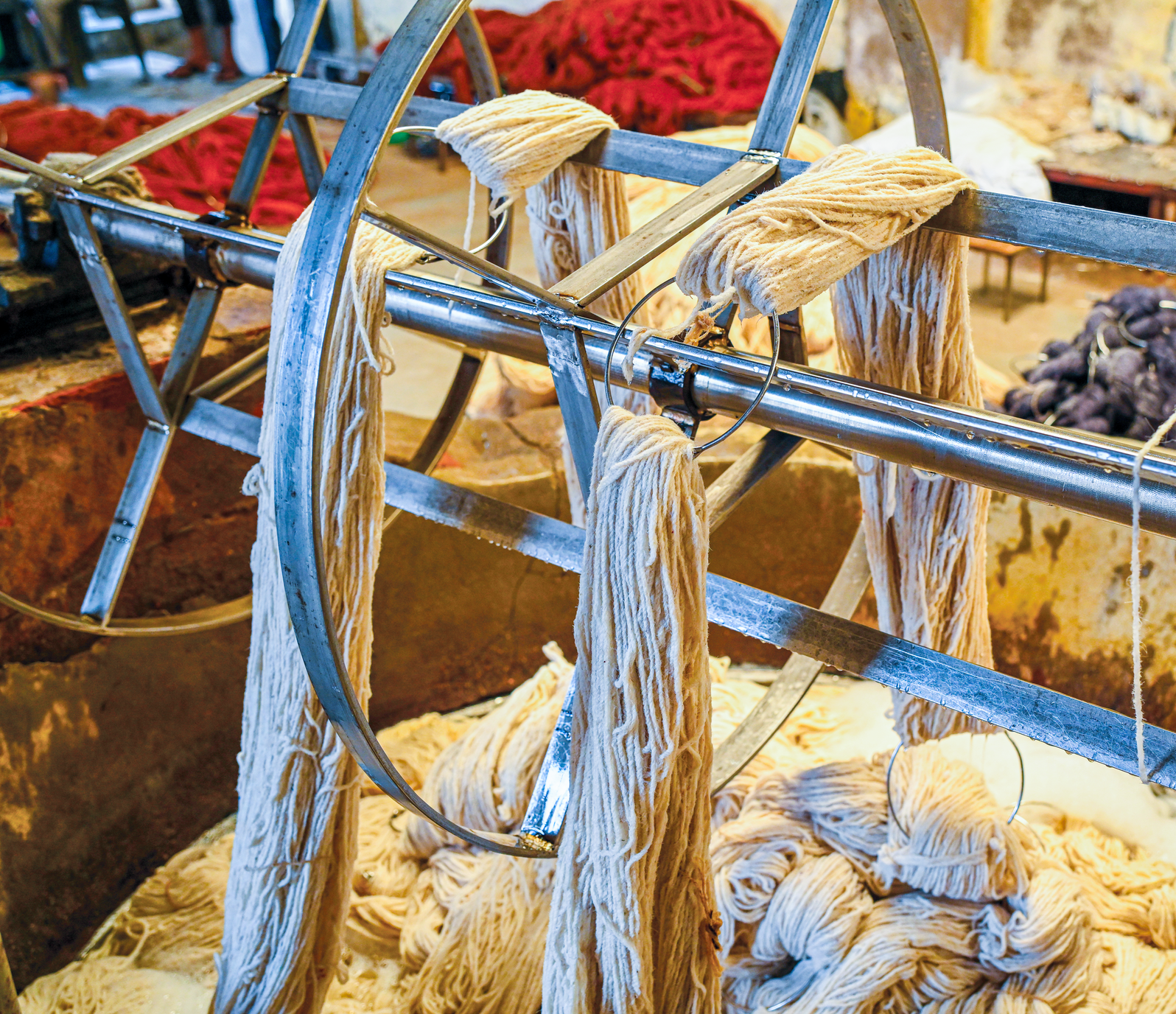
Once the materials are selected, the yarns are carefully prepared for color. Each shade is developed according to the approved shade card, with close attention to tone, depth, warmth, and consistency. The dyeing process is carried out with precision and care, allowing the color to develop evenly through the fiber while maintaining its natural character, texture, and intended appearance.
Each dyed shade is carefully reviewed under appropriate lighting before the weaving process begins, ensuring that the overall palette remains balanced and true to the original design. From subtle neutrals to deeper and more expressive tones, every color is considered for how it will interact with surrounding shades and the overall texture of the carpet.
Once approved, the dyed yarns are prepared for the next stage of production, maintaining the required color consistency and material quality throughout. This stage establishes the visual foundation of the handwoven carpet, allowing the intended design, texture, and color character to emerge naturally through the weaving process.
MATERIAL OPENING
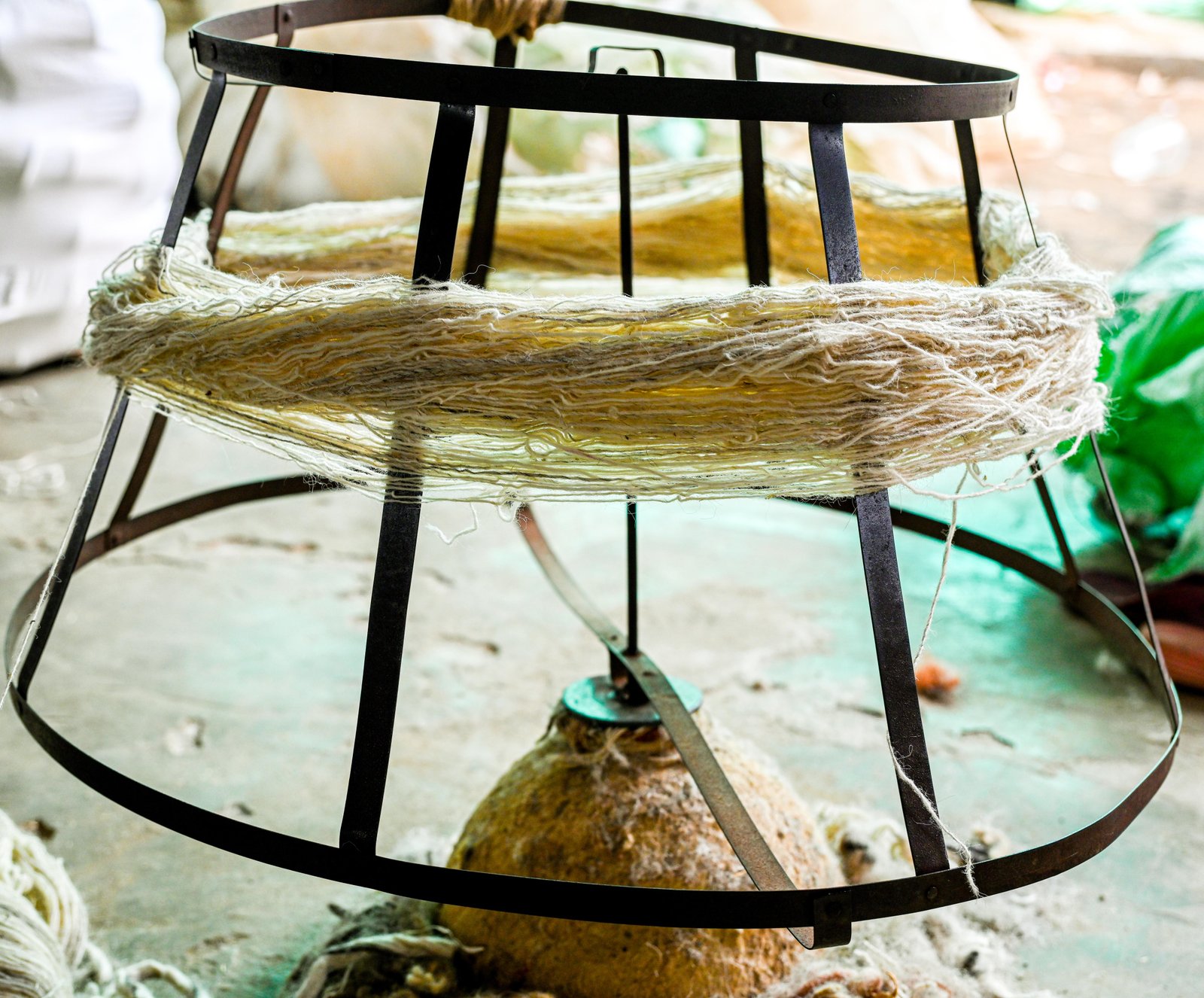
Once the dyed materials are ready, the yarn is carefully opened, loosened, and prepared for the handwoven process. The material is gently separated and conditioned to remove unwanted compactness or irregularities, allowing the yarn to achieve a smoother and more workable form before it reaches the artisan.
Depending on the material and its intended use, the prepared yarn is then arranged and rolled onto suitable bobbins or working forms for easy handling during weaving. Care is taken to maintain a consistent flow and prevent unnecessary tangling, breakage, or variation in the yarn.
This preparation stage helps ensure smoother handling, controlled yarn movement, and greater consistency throughout the weaving process. Properly prepared material allows the artisan to work with greater ease and precision, supporting the intended texture, color placement, structure, and overall character of the finished handwoven carpet.
TANA MAKING
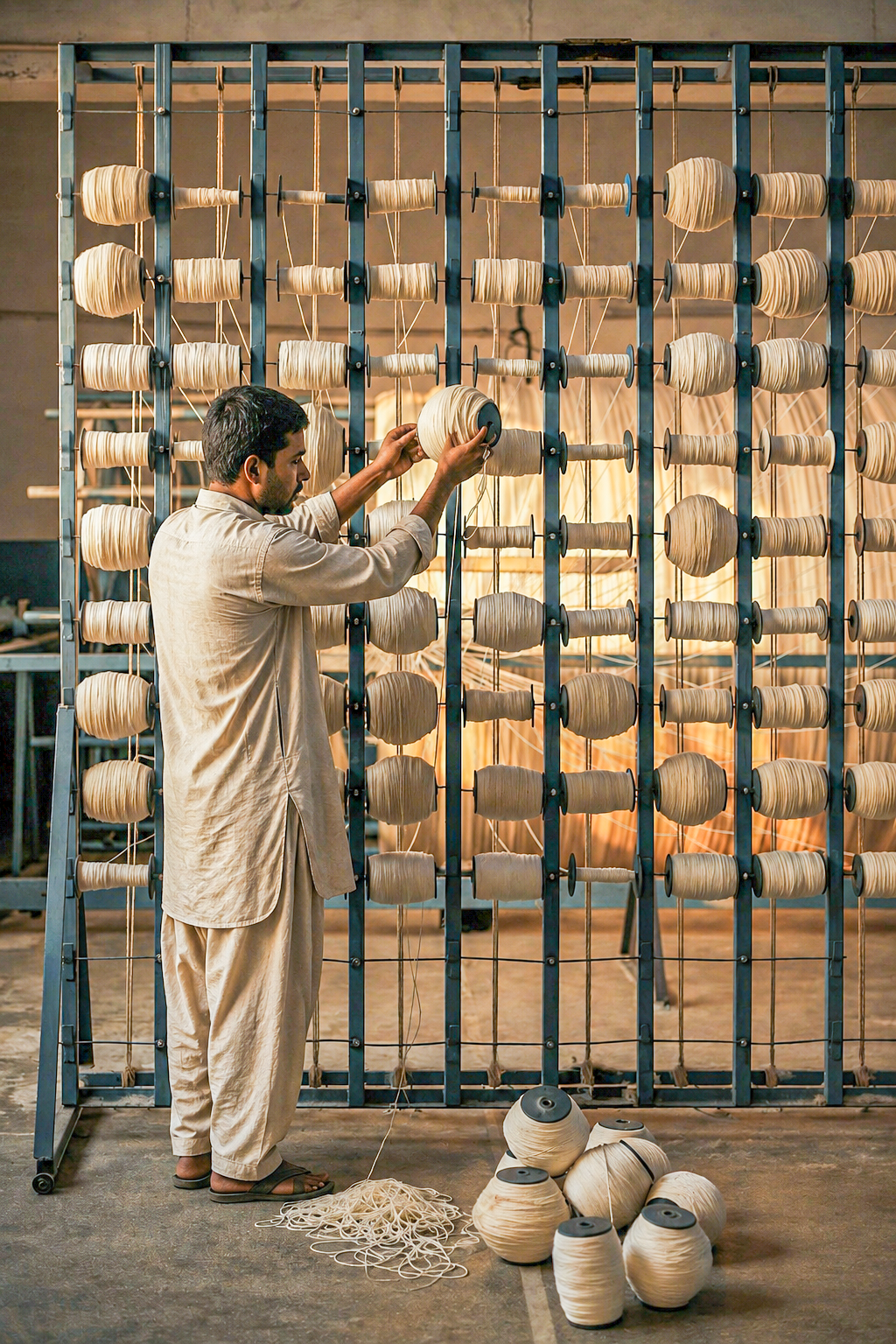
Before weaving begins, cotton yarn is carefully prepared to create the tana, the foundational warp structure of the handwoven carpet. The prepared cotton yarns are arranged and aligned with precision, maintaining consistent spacing and controlled tension to form a strong and uniform foundation for the weaving process.
Each thread is carefully positioned to ensure that the warp remains properly aligned throughout the making of the carpet. The prepared tana is then organized and transferred to the weaving setup, where it provides the structural framework over which the weaving will take place.
This stage requires careful handling and attention to tension, spacing, and alignment. A properly prepared cotton tana establishes the foundation for a stable and consistent construction, allowing the artisan to work smoothly while maintaining the intended dimensions, structure, and character of the finished handwoven carpet.
WEAVING
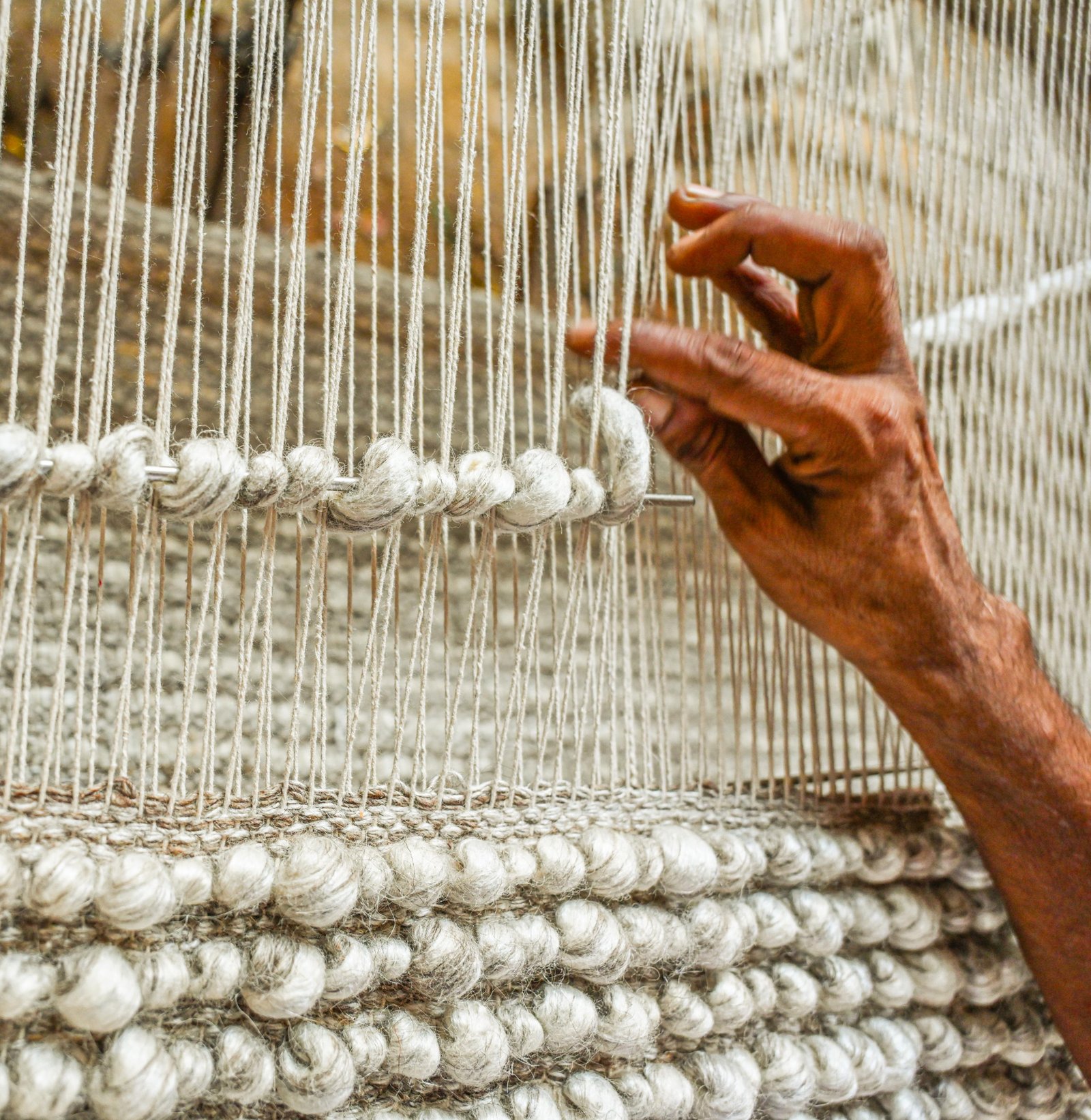
With the cotton tana prepared and the yarns ready, the carpet begins to take shape through traditional handwoven craftsmanship. The prepared warp is carefully mounted and secured, creating the foundation over which the artisan works. The selected yarns are then passed across the warp by hand, gradually building the surface of the carpet while following the approved design plan with careful attention to pattern, color, proportion, and texture.
Throughout the process, the artisan maintains consistent tension, yarn placement, color sequence, and overall structure. Each pass is carefully positioned and compacted into place before the next is made, allowing the surface to develop gradually and evenly. The rhythm of the artisan’s hands, combined with the controlled movement of the loom, gives the carpet its distinctive woven character.
Unlike hand-knotting, where individual knots form the primary construction, handwoven carpets are created through the systematic interlacing of yarn across the prepared warp. As the work progresses, layer after layer comes together to form the finished surface, bringing the design to life through texture, color, and structure. The result reflects the patience, skill, and practiced rhythm of the artisan, with every movement contributing to the carpet’s individual character and enduring beauty.
BACK FINISHING
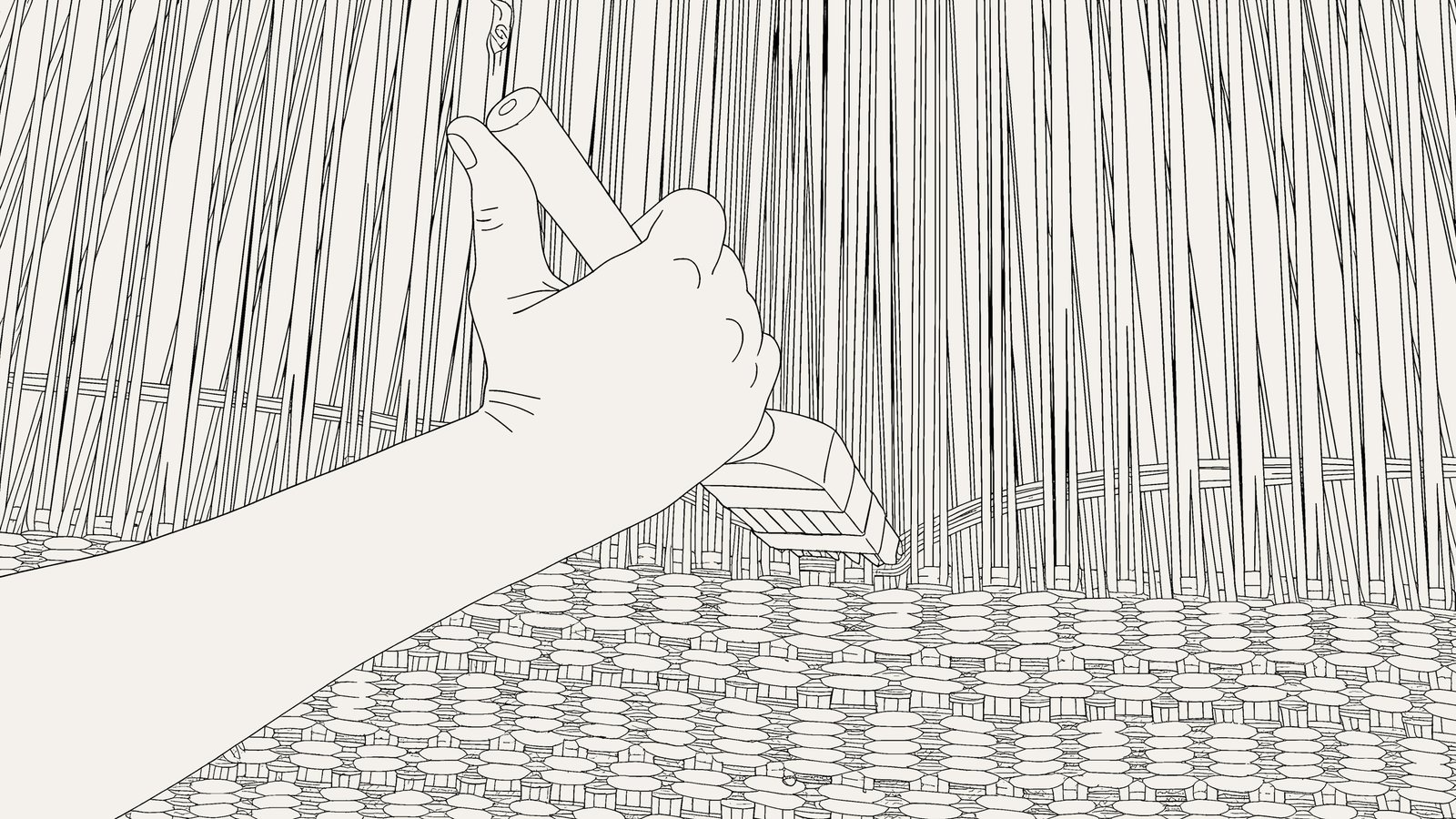
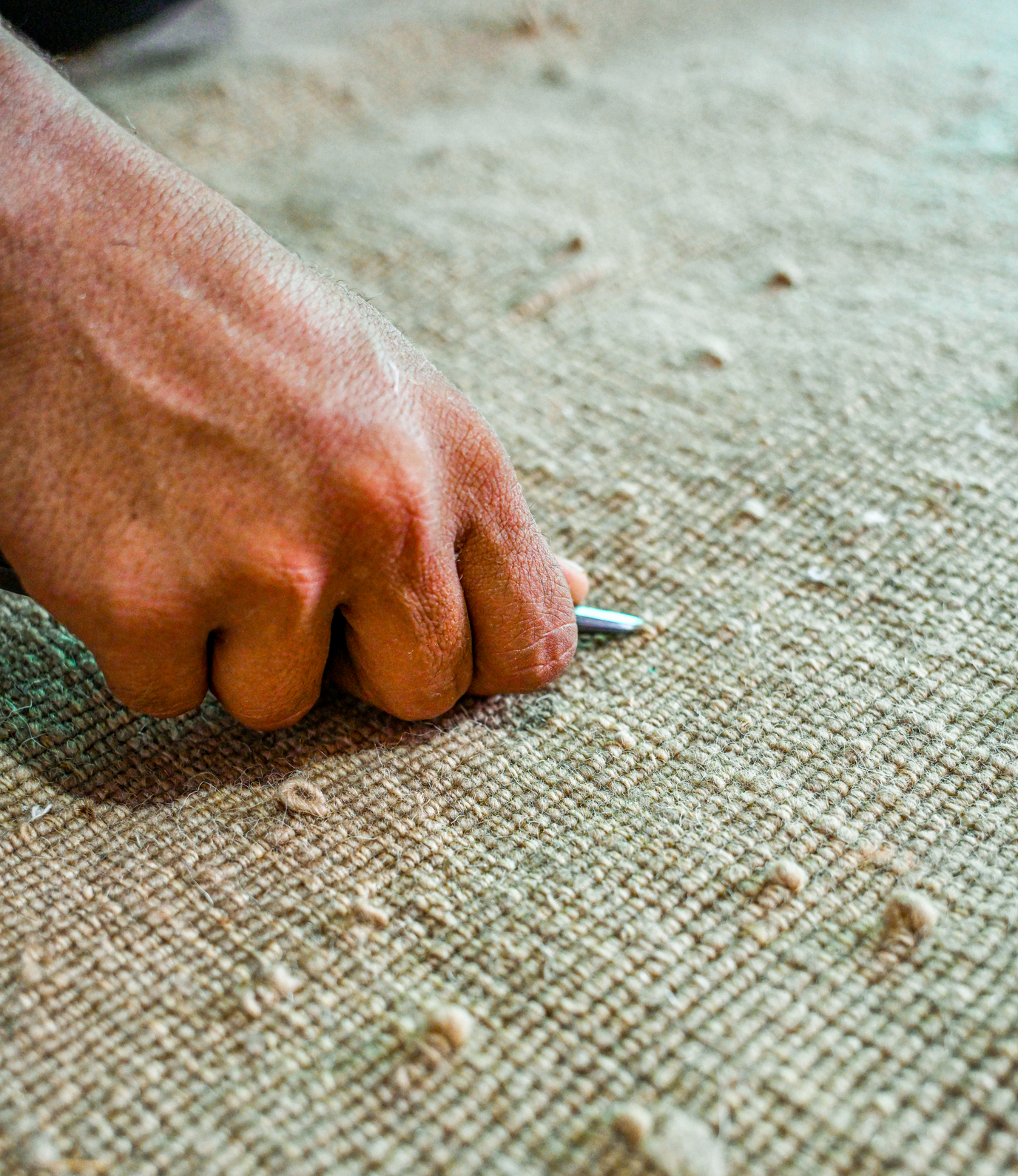
Once the weaving is complete, the back of the carpet is carefully refined by hand to clean and perfect the reverse of the construction. Any yarns or loose fibers that remain raised or protruding from the underside are gently pushed back into place using a sharp metal blade, creating a cleaner, more even, and refined back surface.
The artisan then carefully inspects the warp and weft across the reverse of the carpet. Wherever a thread has been cut, loosened, or disturbed during the weaving process, it is meticulously repaired by hand to restore the integrity and stability of the foundation.
This detailed finishing stage focuses on cleaning, correcting, and refining the reverse, ensuring that the handwoven construction is structurally sound and properly prepared for the subsequent stages of finishing.
STRETCHING
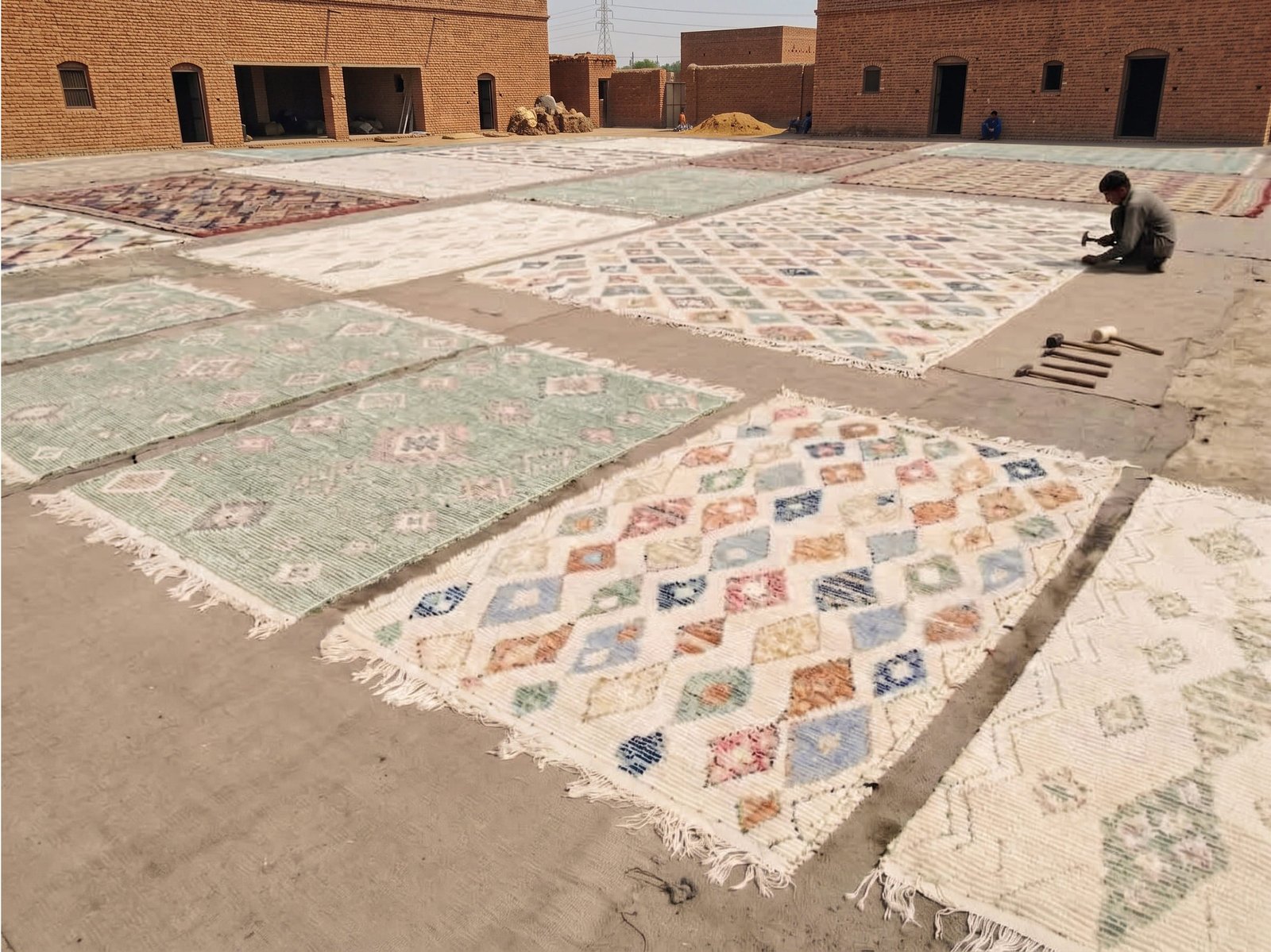
After washing, the handwoven carpet is carefully laid out and stretched under controlled sunlight, allowing it to dry naturally while settling into its intended form. During this stage, selected finishing chemicals may be applied to the reverse side of the carpet as part of the traditional Thedha process, helping condition and set the carpet as it moves toward its final form.
Thedha also plays an important role in correcting proportion, alignment, and shape. The carpet is carefully stretched and adjusted from all sides, allowing minor distortions that may have occurred during weaving, washing, or handling to be corrected. Length, width, corners, edges, and overall proportions are carefully checked and refined to bring the carpet as close as possible to its intended dimensions and balanced shape.
Through this controlled finishing process, the carpet settles into a more precise, stable, and well-defined form, preparing the handwoven piece for the final stages of finishing and inspection.
EDGE SEWING
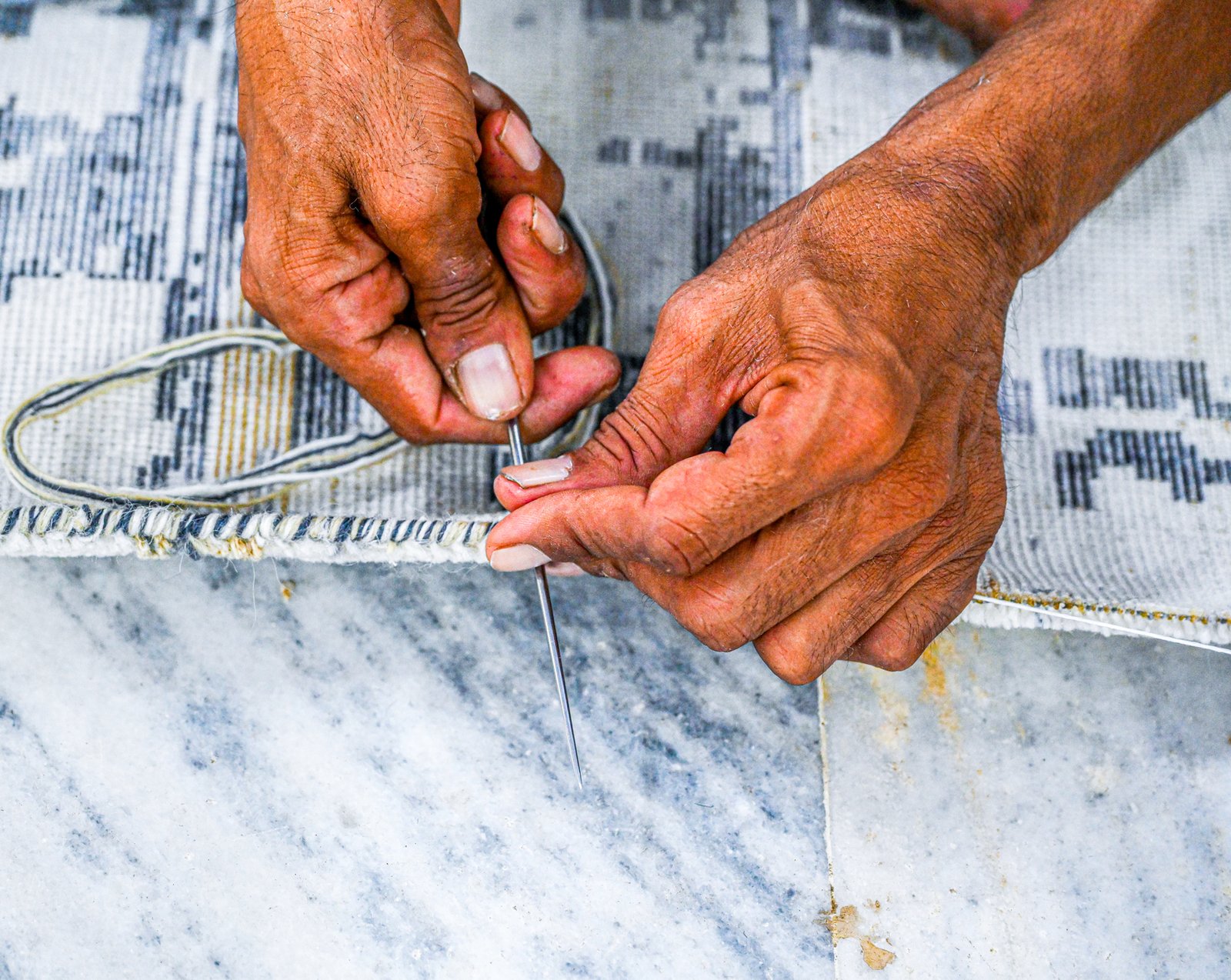
Once the carpet has been washed, stretched, and properly set, its edges are carefully finished by hand to secure and refine the woven construction. Using selected yarn and a suitable needle, the artisan works carefully along the perimeter, securing the edge and creating a clean, defined finish.
Particular attention is given to maintaining even tension and consistent alignment throughout the process. The corners and transitions are carefully worked to ensure the edge follows the corrected shape of the carpet without disturbing its proportions or surface.
This detailed hand-finishing stage reinforces the perimeter of the carpet while giving it a neat and refined appearance. The result is a clean, durable edge that complements the natural character and craftsmanship of the handwoven construction.
INSPECTION
Before a handwoven carpet leaves The Carpetra, it undergoes a thorough final quality inspection. Every detail is carefully examined to ensure the finished carpet meets its intended specifications and reflects the quality, precision, and character of the original design.
The carpet is measured from all sides to verify its length, width, proportions, corners, and overall shape. The surface is carefully assessed for weaving consistency, texture, tension, color placement, and overall uniformity. The colors are compared against the approved shade references to ensure accurate color expression and harmony with the original design.
The artisan and quality team also inspect the edges, corners, reverse, surface finish, loose yarns, weaving irregularities, and overall structural integrity. Where applicable, any high-low detailing, carving, or other design-specific elements are checked against the intended specifications.
Only after the carpet has been carefully reviewed and any necessary refinements completed is it approved for its final stage. This meticulous inspection ensures that every handwoven carpet leaving The Carpetra reflects the desired balance of craftsmanship, precision, quality, and enduring character.