
The Perfect Balance of Tradition and Precision.
Every Indo-Tibetan carpet begins with a vision and unfolds slowly through the skilled hands of experienced artisans. Crafted knot by knot using carefully selected materials and traditional techniques, each piece reflects the patience, precision, and quiet discipline that define genuine hand knotting. From refined colors and intricate patterns to distinctive textures and bespoke dimensions, every detail is thoughtfully considered to give the carpet its own identity and enduring character. Rooted in the rich heritage of Indo-Tibetan carpet making while embracing contemporary design, indo-tibetan carpets are admired for their exceptional craftsmanship, tactile depth, and timeless presence. At The Carpetra, every carpet is more than a floor covering—it is a handcrafted expression of heritage and artistry, patiently created to become part of a space and cherished for years to come.
The Knotting Journey
DESIGN DEVELOPEMENT
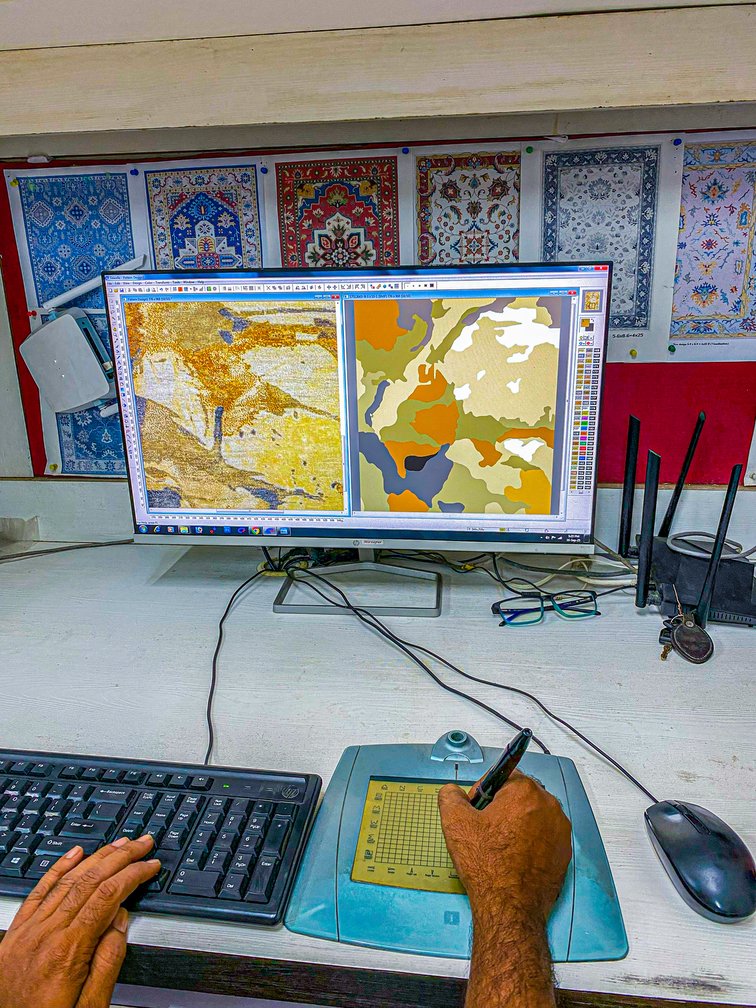
The approved artwork is developed into a precise CAD design, where proportions, patterns, colors, and intricate details are carefully mapped for the loom-knotting process. Every element is thoughtfully refined to ensure that the design translates naturally into a hand-knotted carpet, with particular attention given to scale, composition, knot structure, and the level of detail the finished piece is intended to carry.
Once the design is finalized, a detailed Naksha (design map) is prepared as the artisan’s visual guide for knotting. A carefully developed shade card is also created to establish the intended color palette and yarn selection. Together, these references provide the foundation for a disciplined knot-by-knot process, allowing the artisan to preserve the proportions, character, and original intent of the design throughout its making.
MATERIAL SELECTION
The right material gives an Indo-Tibetan carpet much of its character—its softness, strength, texture, color expression, and longevity. Based on the design, knotting technique, intended use, and desired finish, carefully selected fibers such as New Zealand wool, fine Indian wool, semi wool, silk, viscose, tencel and other suitable fibers are considered for each carpet. The material is chosen not only for how it feels, but also for how naturally it responds to the knotting process and supports the detail of the design.
From the natural resilience and warmth of wool to the refined luster of silk and selected blended fibers, each material brings its own character to the finished carpet. Fiber quality, yarn suitability, and material consistency are carefully evaluated at this stage, ensuring that the chosen material can withstand the patience of hand knotting while delivering the intended balance of beauty, performance, and enduring character.
MATERIAL DYEING
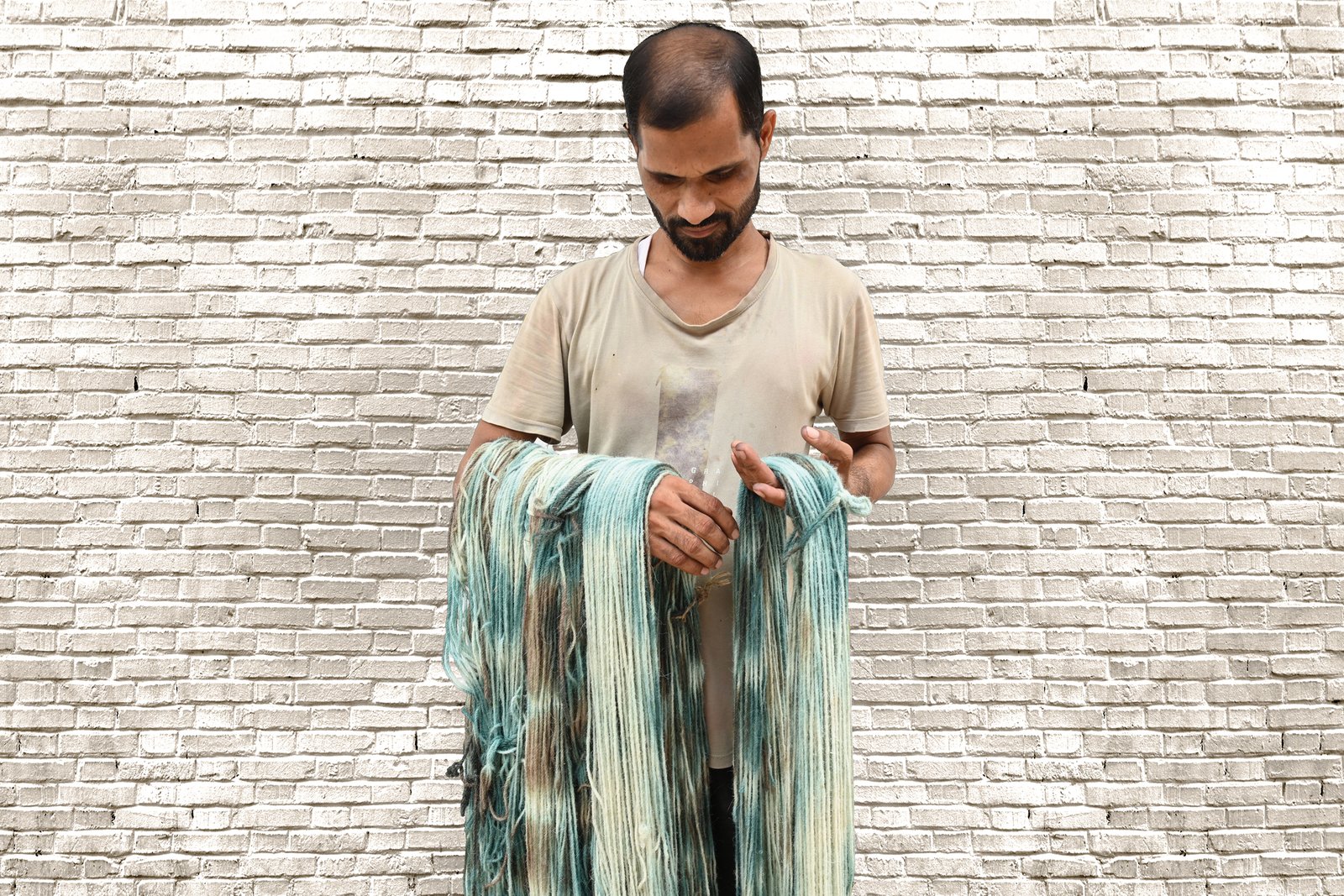
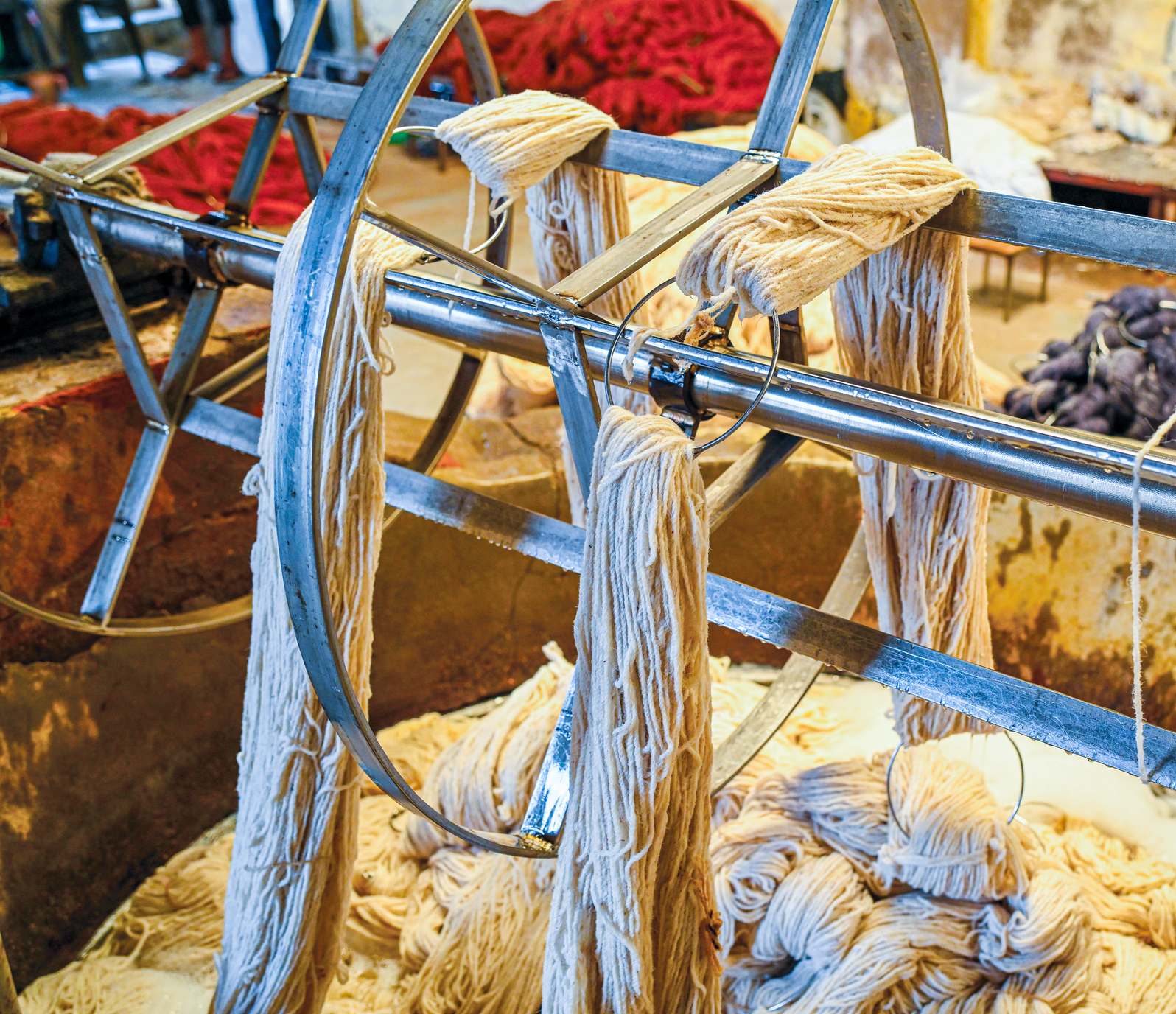
Once the materials are selected, the yarns are carefully prepared for color. Each shade is developed to match the approved shade card, with close attention to tone, depth, warmth, and consistency. The dyeing process is carried out with precision and care, allowing the color to develop evenly through the fiber while preserving its natural character, softness, and intended appearance.
Each dyed shade is reviewed under appropriate lighting before knotting begins, ensuring that the palette remains balanced and true to the original design. From understated neutrals to rich, expressive tones, every color is considered for how it will interact with neighboring shades and the overall composition. This stage establishes the visual character of the carpet, preparing each yarn to be transformed knot by knot by the artisan.
MATERIAL OPENING
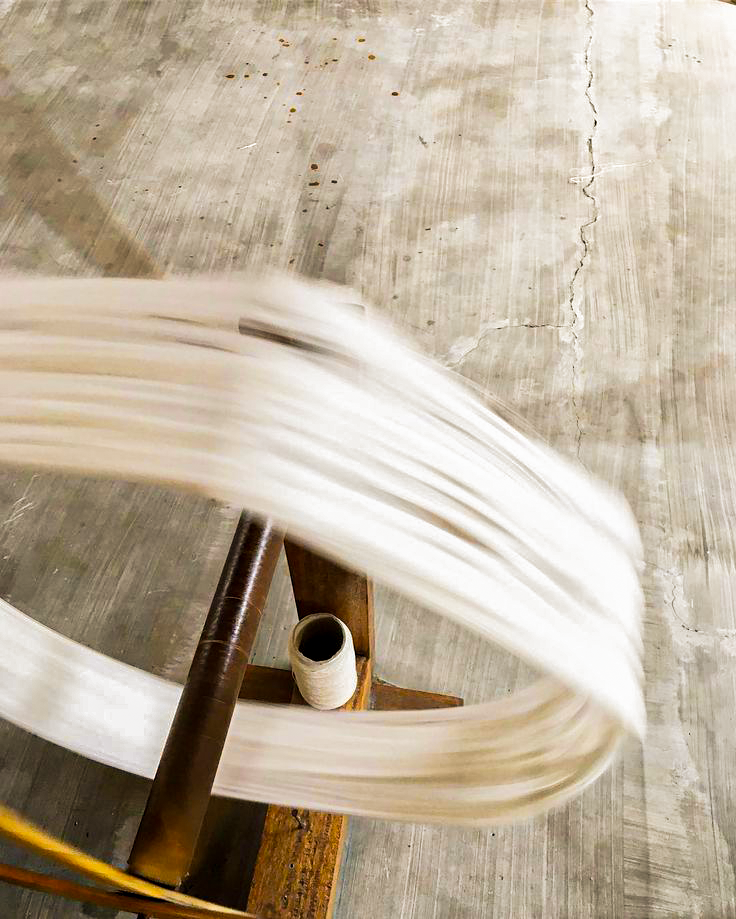
Once the dyed materials are ready, the yarn is carefully opened, loosened, and prepared for weaving. The fibers are gently separated and conditioned to achieve the right consistency and workable form, allowing the artisan to handle the yarn smoothly and maintain an even rhythm throughout the weaving process without compromising its natural character.
Although this stage is part of the preparation, it plays an important role in the quality of the finished carpet. Properly prepared yarn supports consistent knot formation, even tension, clean color placement, and a uniform surface, giving the artisan greater control as the design gradually develops knot by knot.
WEAVING
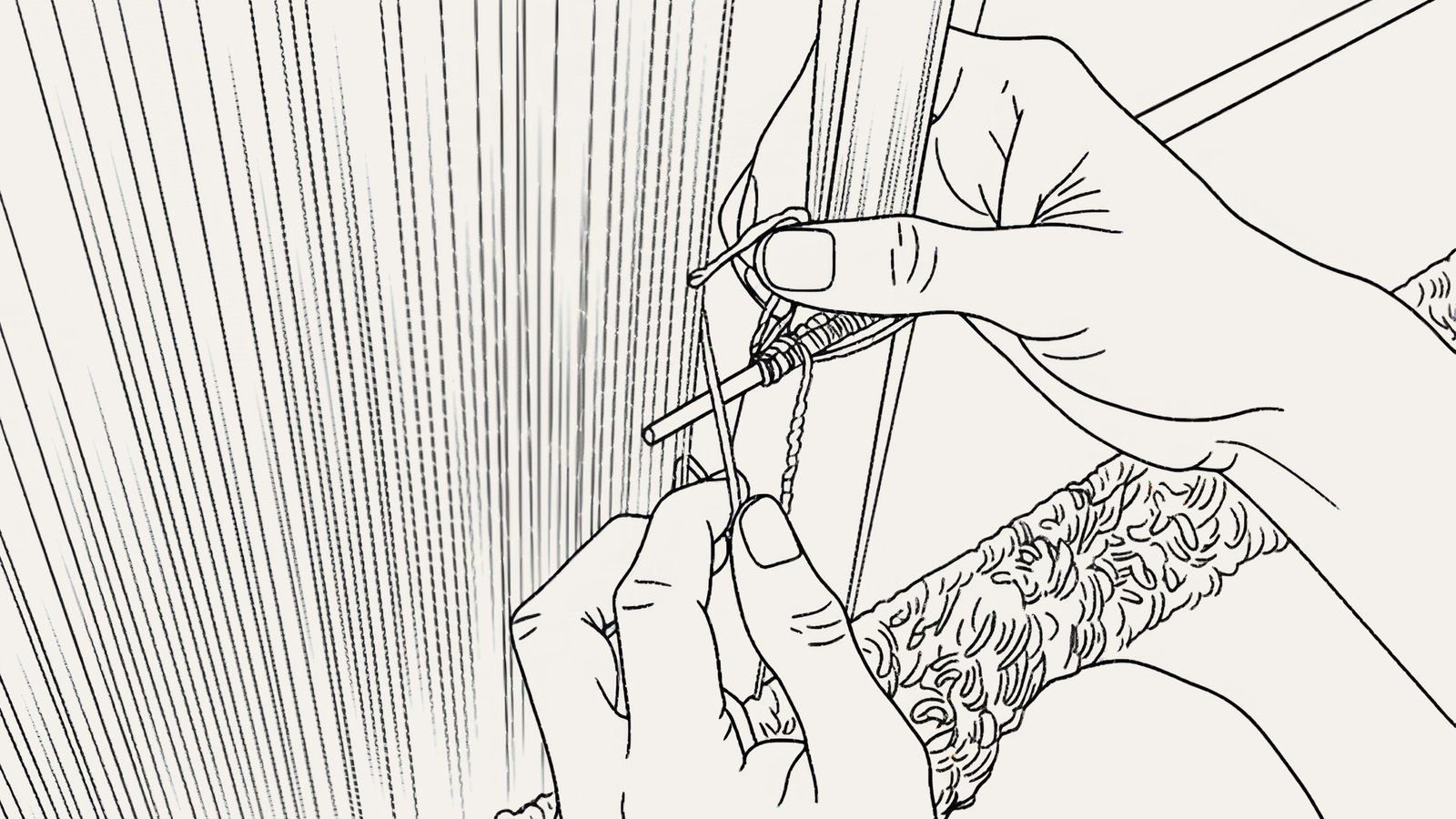
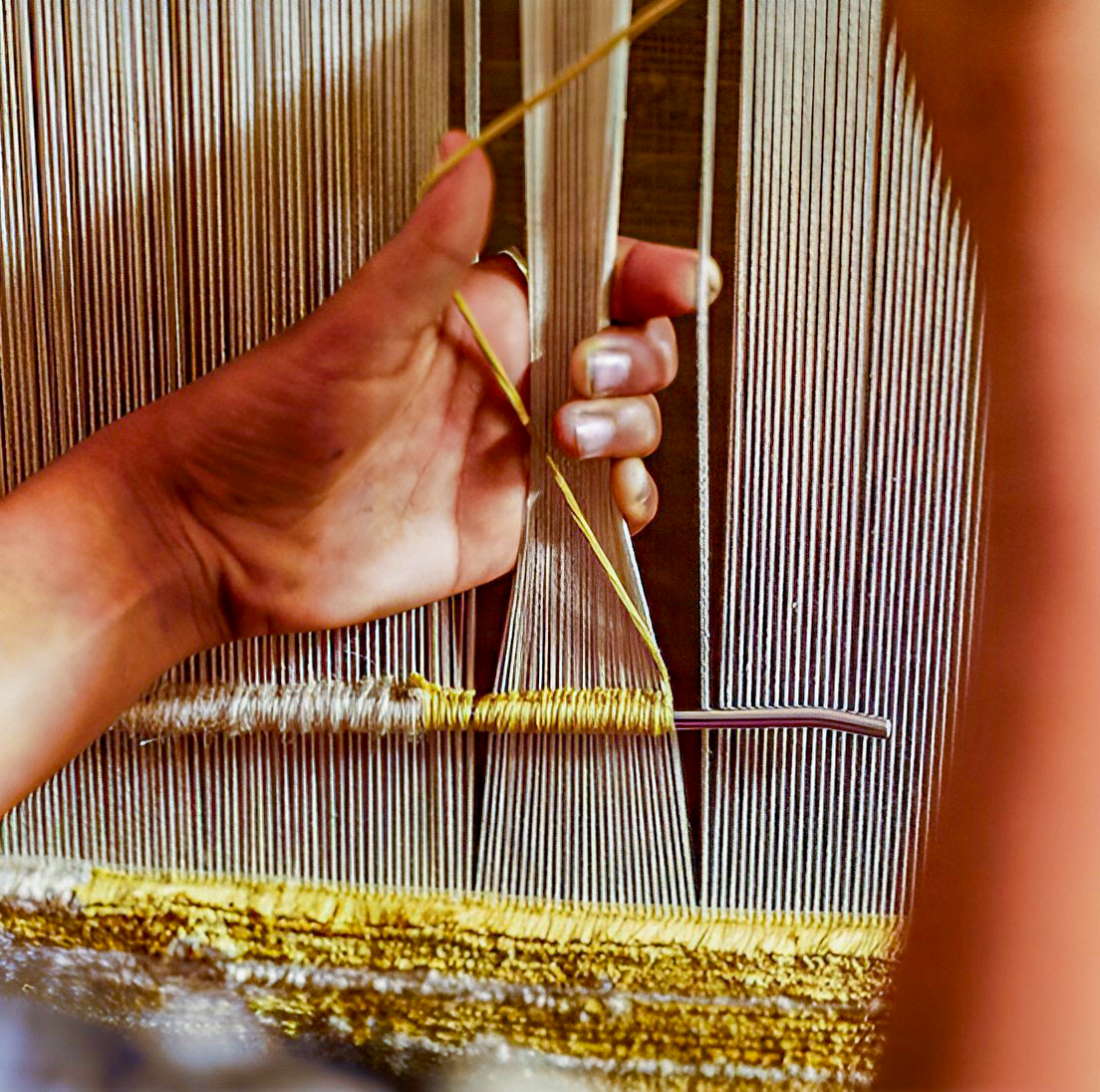
With the design map prepared and the yarn ready, the carpet begins to take shape through traditional hand knotting. In Indo-Tibetan construction, artisans work systematically across the foundation, creating individual knots by hand and following the Naksha (design map) with careful attention to every detail. Each knot is secured around the foundation and built row by row, gradually forming the pattern, color, and structure of the carpet.
The knotting technique allows the artisan to maintain precise knot placement, tension, density, color sequence, and design proportions throughout the process. Depending on the desired construction, Indo-Tibetan carpets may use characteristic Tibetan-style knotting methods that contribute to their distinctive texture and appearance. As the rows progress, thousands of individual knots come together to create a cohesive surface—making patience, consistency, and skilled handwork fundamental to the final carpet.
BACK FINISHING
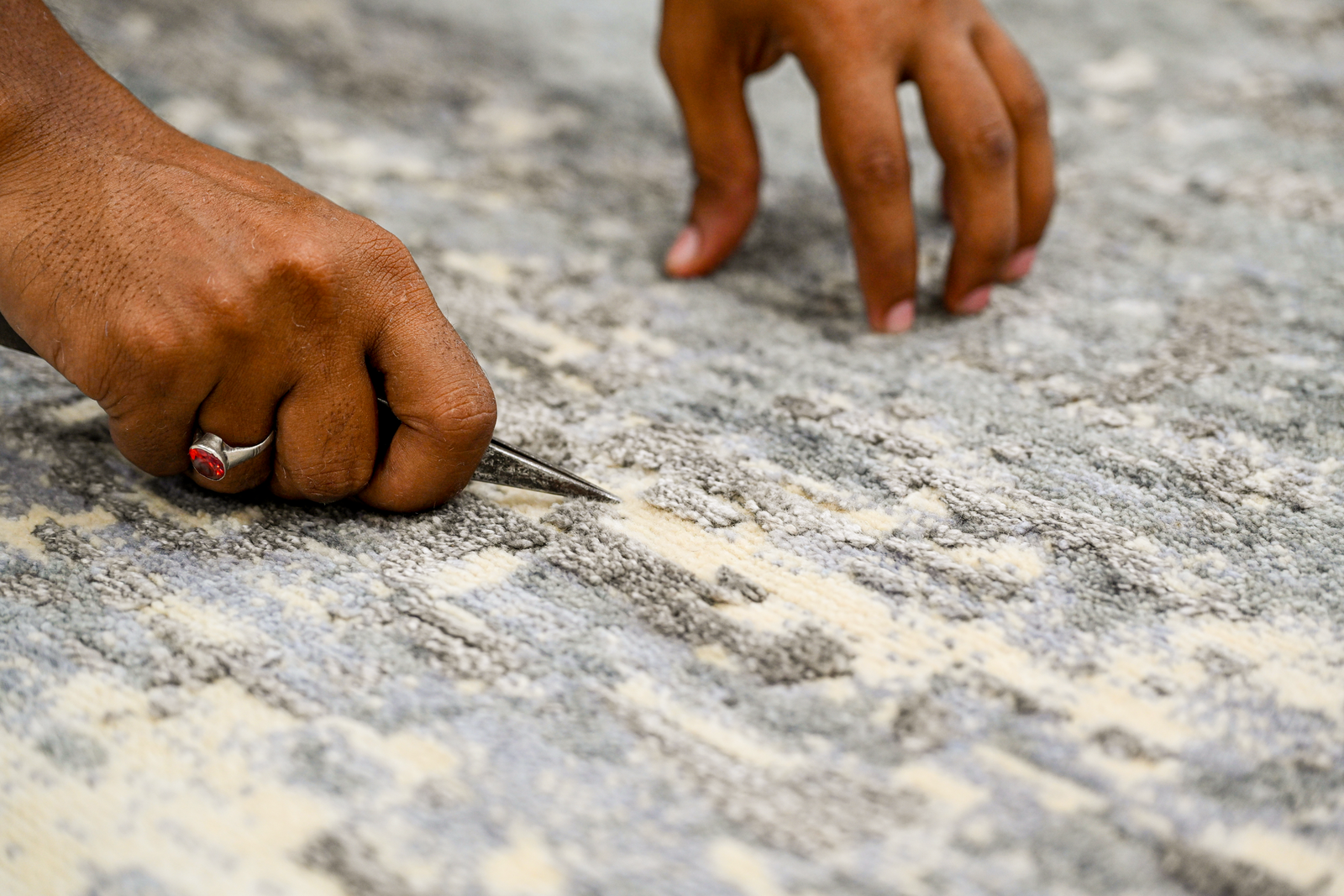
Once the weaving is complete, the back of the carpet is carefully refined by hand through a process known as Khopin. At this stage, any yarns that remain raised or protruding from the reverse are gently pushed back into place using a sharp metal blade, creating a cleaner and more even underside.
The artisan also carefully inspects the warp and weft across the reverse. Wherever a thread has been cut or disturbed during the weaving process, it is meticulously repaired by hand to restore the integrity of the foundation. This is a precise finishing stage focused on cleaning, correcting, and refining the reverse, ensuring the woven construction is ready for the final stages of finishing.
WASHING
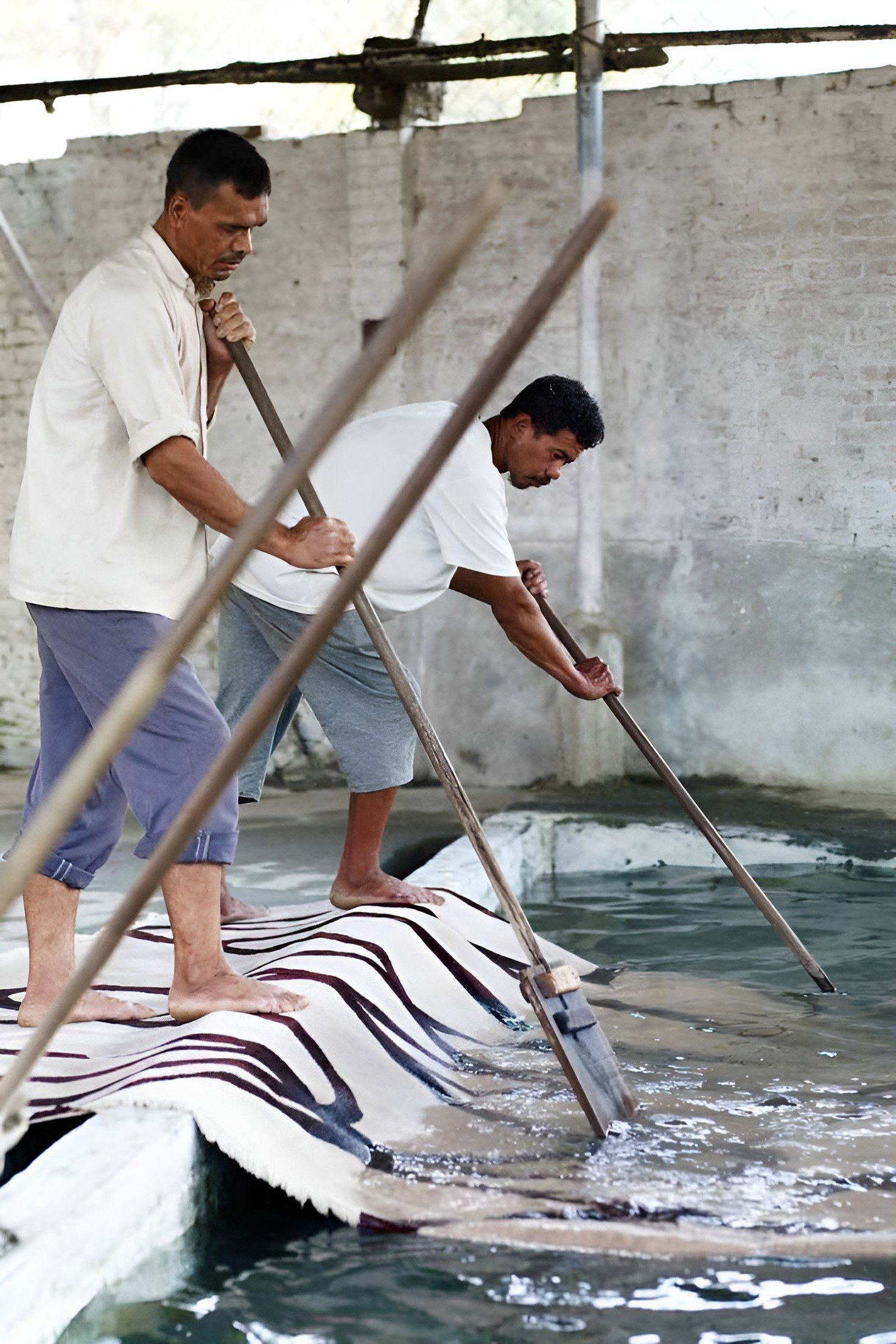
Washing is where the woven carpet begins to reveal its finished character. After the Indo-Tibetan construction is complete, the carpet is carefully washed by skilled artisans to clean the fibers, settle the surface, and bring greater clarity and depth to the colors. The process is carried out with controlled amounts of water, suitable cleaning agents, and careful handling according to the material and construction.
The carpet is worked gently to remove residual dust, loose particles, and impurities from the weaving process without compromising its structure. As it is washed and rinsed, the fibers settle naturally, allowing the texture, color, and character of the design to become more defined. Washing is not simply a cleaning stage—it is an important part of bringing the craftsmanship to its final expression.
STRECHING
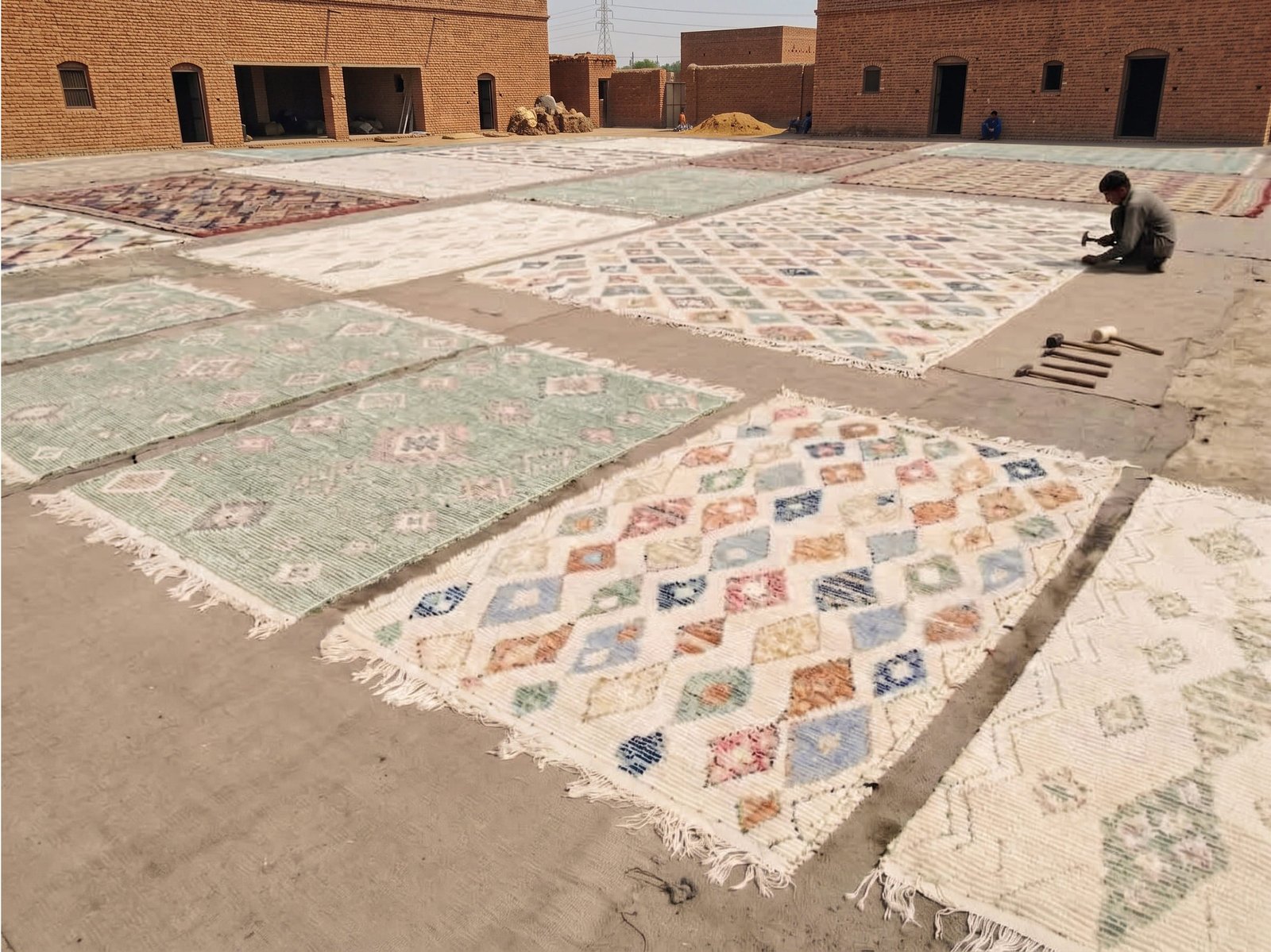
The carpet is carefully laid out and stretched on the ground under controlled sunlight to dry and settle. During this stage, selected finishing chemicals are applied to the reverse side of the carpet as part of the traditional Thedha process. This helps condition and set the carpet as it moves toward its final form.
Thedha is also an important stage for correcting proportion and shape. The carpet is carefully stretched and aligned from all sides, allowing any minor distortion created during weaving, washing, or handling to be corrected. Length, width, corners, and overall proportions are checked and adjusted with care, bringing the carpet as close as possible to its intended dimensions and balanced shape. The result is a more precise, well-set carpet with a clean and considered final form.
EDGE BINDING
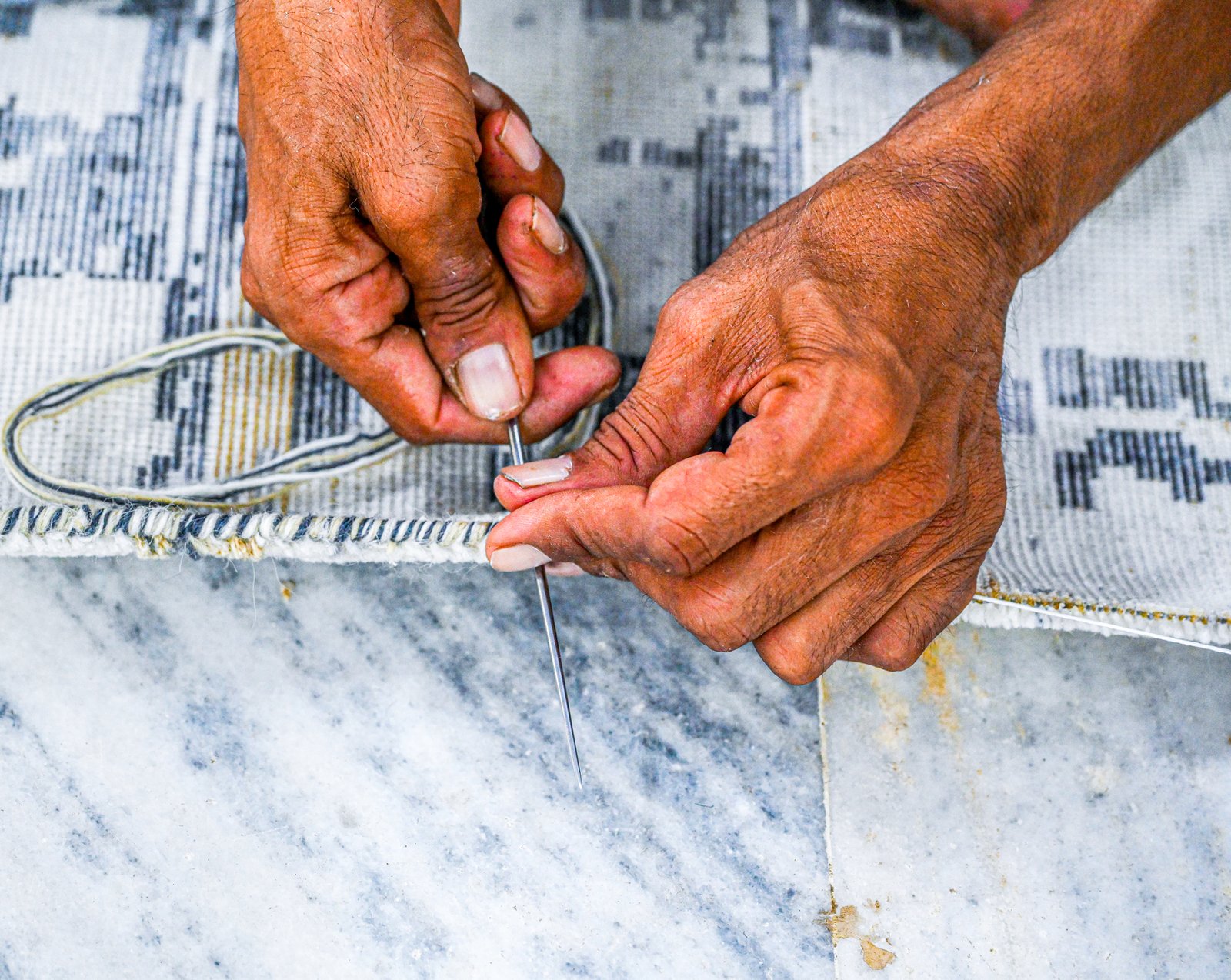
Once the carpet has been washed, shaped, and properly set, the edges are carefully finished by hand through a traditional process locally known as Pechai. Using a long metal needle and selected yarn, the artisan works continuously along the perimeter, wrapping and stitching the yarn around the edge to secure and reinforce the woven structure.
The process requires patience and controlled handwork to maintain even tension, clean alignment, and consistent edge definition. Particular care is given to the corners and transitions, ensuring the binding follows the corrected shape of the carpet without disturbing its proportions. This hand-finished edge provides a neat, durable perimeter while preserving the authentic character of Indo-Tibetan craftsmanship.
CLIPPING
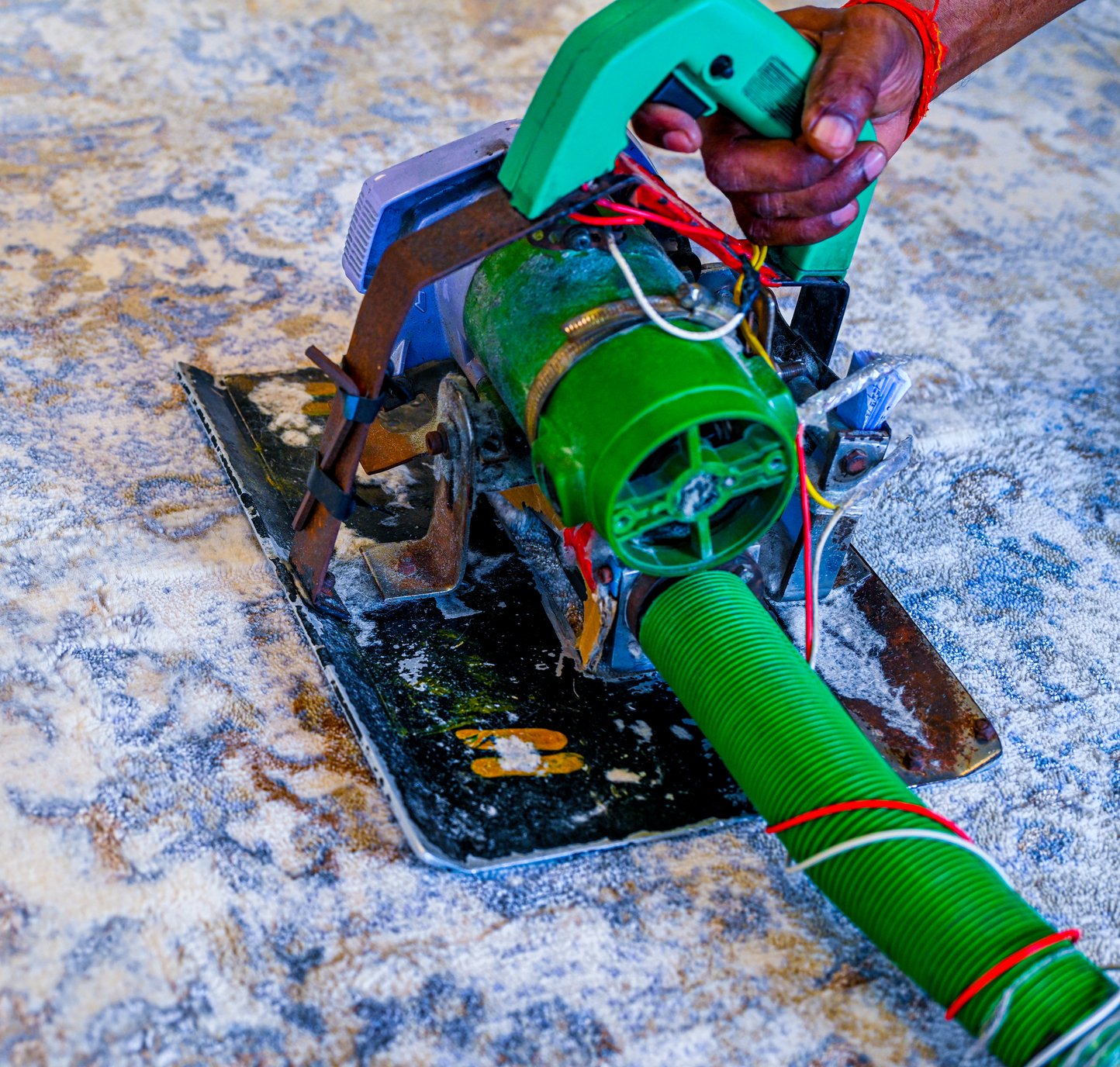
After the edge binding is complete, the carpet moves through careful clipping, where the surface is refined by hand to achieve an even and well-balanced finish. Skilled artisans carefully trim excess or uneven yarns, bringing the pile to a consistent height while preserving the clarity of the design and the natural character of the material.
This stage requires a trained eye and a steady hand. The artisan works across the surface with precision, refining uneven areas without disturbing the knots or underlying construction. The result is a cleaner, more uniform surface that allows the colors, patterns, texture, and craftsmanship of the Indo-Tibetan carpet to appear with greater clarity.
CARVING
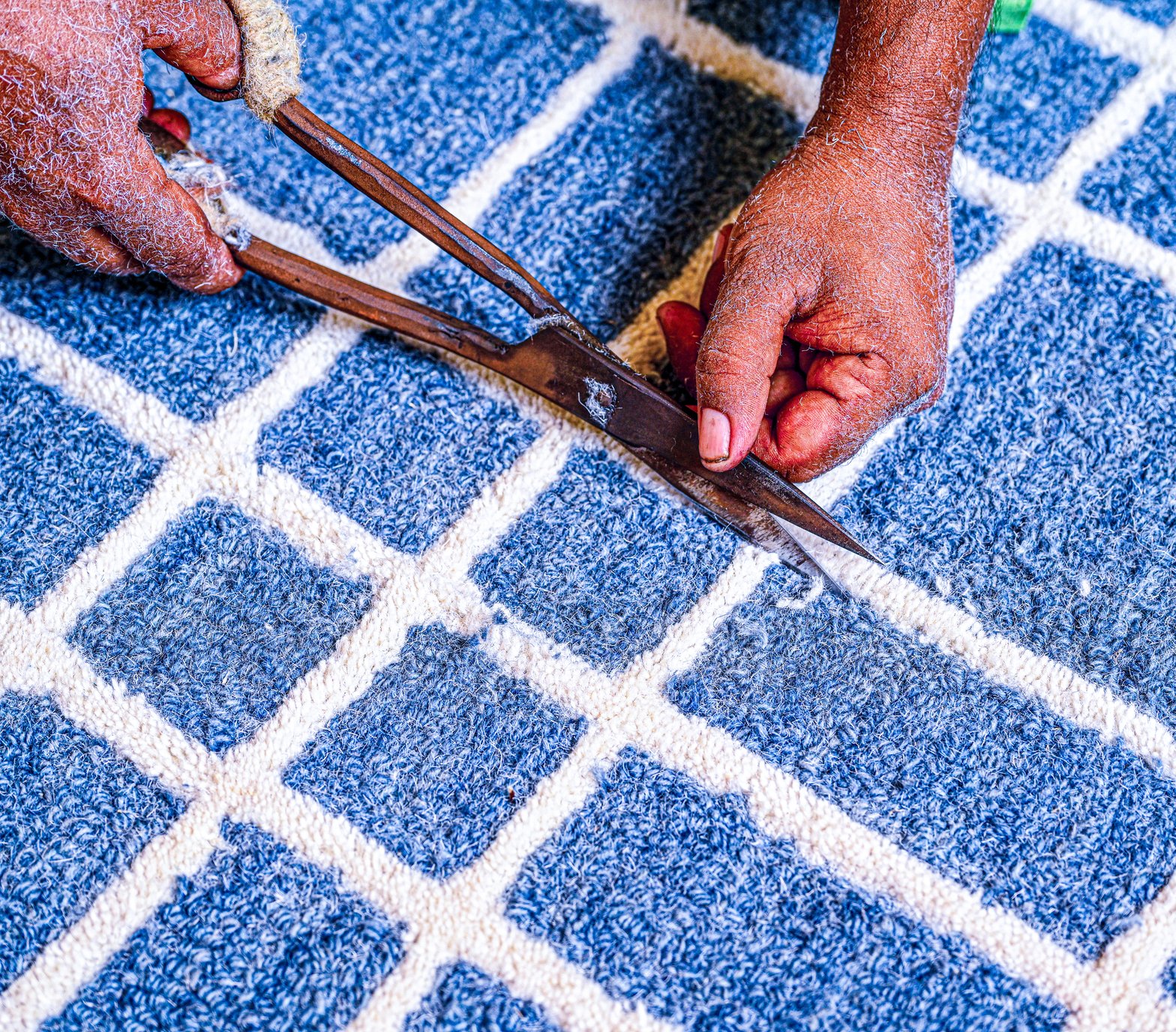
Carving brings a refined sense of depth, definition, and dimension to the Indo-Tibetan carpet. After clipping, skilled artisans carefully sculpt selected areas of the pile by hand, creating subtle variations in height that help separate motifs, borders, and individual elements of the design.
Using specialized hand tools, the artisan follows the intended pattern with precision, carefully removing excess pile along designated lines and contours. The process requires a steady hand and a trained eye, as even a small variation can influence the character of the design. Through this careful detailing, patterns gain greater visual clarity, tactile depth, and sculptural expression, allowing the carpet to interact beautifully with light and shadow.
INSPECTION
Before a Indo-Tibetan carpet leaves, it undergoes a thorough final quality inspection. Every detail is carefully examined to ensure the finished carpet meets its intended specifications and reflects the precision of the original design.
The carpet is measured from all sides to verify its length, width, proportions, and overall shape. The KPSI (Knots Per Square Inch) is checked to confirm the required knot density, while pile height and surface consistency are carefully assessed. The colors are compared against the approved shade references to ensure accurate color expression and harmony with the original design. The artisan also examines the edges, corners, carving, surface finish, loose yarns, and overall construction for any irregularities requiring correction.
Only after these details have been carefully reviewed and any necessary refinements completed is the carpet approved for its final stage. This meticulous inspection ensures that every Indo-Tibetan carpet leaving The Carpetra carries the expected balance of precision, craftsmanship, quality, and enduring beauty.
.png)